Greenbrier River smallmouth bass fishing
There's nothing quite like the feeling of a hard-fighting smallmouth bass on the end of your line, especially when you're surrounded by the breathtaking beauty of West Virginia's rivers. Many anglers dream of finding that perfect stretch of water, teeming with aggressive bronzebacks, but often struggle to pinpoint the truly productive spots or the right techniques to consistently hook up. This guide aims to take the guesswork out of your next adventure, focusing specifically on how to unlock the incredible smallmouth bass fishing opportunities that await you on the magnificent Greenbrier River.
The Allure of Greenbrier River Smallmouth Bass
The Greenbrier River, a jewel in West Virginia's crown, is renowned among anglers for its crystal-clear waters, abundant rock structure, and, most importantly, its robust population of feisty smallmouth bass. Unlike some murky reservoirs or slow-moving channels, the Greenbrier offers a dynamic, riverine experience where every bend and ripple holds the promise of a thrilling encounter. The smallmouth here aren't just fish; they're wild, powerful predators honed by the constant current, making them some of the hardest-fighting freshwater fish you'll ever tangle with.
Understanding the Greenbrier's Ecosystem
The ecological health of the Greenbrier is what truly sets it apart. Flowing through the picturesque Allegheny Mountains, the river benefits from excellent water quality, often maintaining a pristine clarity that allows for visual fishing in many areas. This clarity, combined with a diverse substrate of rock, gravel, and submerged timber, creates an ideal habitat for smallmouth. You'll find everything from shallow, oxygen-rich riffles to deeper, slow-moving pools and current seams behind large boulders.
The foundation of the Greenbrier's smallmouth population is its rich forage base. Crayfish, dace, chubs, and various aquatic insects thrive in these waters, providing an endless buffet for growing bass. Observing what the local baitfish are doing, or even flipping over a few rocks to see what insects and crustaceans are present, can give you invaluable clues about what the smallmouth are actively feeding on. Understanding these subtle cues—like noticing a particular type of minnow darting around or a crayfish scuttling under a rock—can dramatically improve your success rate. This healthy ecosystem ensures a strong population of fish that are active and aggressive, always ready to ambush a well-presented lure.
The Thrill of the Fight
If you've never hooked into a Greenbrier River smallmouth, prepare for an adrenaline rush. These aren't your sluggish pond bass; the current has built them into lean, mean fighting machines. When a Greenbrier smallmouth hits, it's often with a jarring strike that reverberates up your rod. They immediately leverage the river's flow to their advantage, making powerful runs, diving into structure, and frequently launching themselves into acrobatic jumps that can truly test your knot strength and angling skill.
Imagine casting a topwater popper near a submerged log on a calm summer evening. The lure lands softly, you give it a twitch, and BOOM! A sudden explosion on the surface, and your rod bends double. The fish surges downstream, ripping line from your reel, then changes direction, trying to wrap you around a mid-river boulder. It’s this unpredictable, no-holds-barred fight that keeps anglers coming back to the Greenbrier year after year. Every fish feels like a trophy, regardless of its size, because you've truly earned it in this challenging environment.
Prime Fishing Spots and Access Points on the Greenbrier
The Greenbrier River stretches for over 160 miles, offering an incredible diversity of fishing experiences. Knowing where to start and how to access the river is key to a successful outing. While much of the river flows through remote, pristine wilderness, there are numerous public access points that allow anglers to explore its hidden gems.
Upper, Middle, and Lower River Sections
To truly understand the Greenbrier, it helps to break it down into general sections, as each offers a slightly different character and fishing challenge.
The Upper Greenbrier (Cass to Marlinton Area): This section is generally narrower, faster, and more characteristic of a classic mountain stream. It's often more remote, requiring a bit more effort to reach, but the reward is pristine water and a sense of solitude. Access points here are often smaller, less developed, and might require some bushwhacking or walking. Think of areas around towns like Cass or Marlinton. Here, you'll find more riffles and smaller pools, perfect for wading or launching a small canoe or kayak for a peaceful float. The fish might be smaller on average, but they are incredibly numerous and vibrant.
The Middle Greenbrier (Ronceverte to Lewisburg Area): As the river flows south, it gradually widens and slows, though still maintaining a good current. This middle section, particularly around Ronceverte and Lewisburg, offers a fantastic balance of accessibility and excellent fishing. Here you'll find a mix of larger pools, longer runs, and still plenty of rock gardens and submerged structure. Public access points are more frequent and often better maintained, including dedicated boat ramps. This is a popular stretch for longer floats in canoes or kayaks, allowing you to cover significant water and target a variety of habitats. Many anglers find the best blend of quantity and quality in this section.
The Lower Greenbrier (Hinton to the New River Confluence): Downstream, as the Greenbrier approaches its confluence with the New River near Hinton, it becomes significantly larger, deeper, and slower. While the current is less pronounced, the sheer volume of water and larger, deeper pools can hold some truly enormous smallmouth, along with other species like walleye and muskie. Access here is typically via developed boat ramps suitable for larger river boats, though kayaks and canoes are still excellent choices for exploring specific stretches. The fishing here can be fantastic, but it often requires different tactics, focusing more on deeper presentations and targeting submerged structure in the larger pools.
Navigating the River: Wading, Kayaking, and Small Boats
Choosing your mode of transport depends heavily on the section of the Greenbrier you plan to fish and your personal preferences.
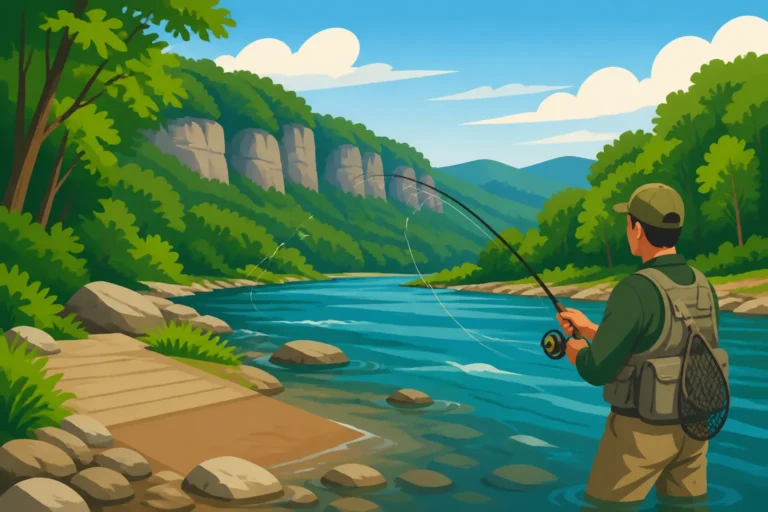
Wading: For many purists, wading is the quintessential Greenbrier experience. It allows for stealthy approaches, precise lure placement, and direct engagement with the river's intimate details. The upper and middle sections, with their shallower riffles and runs, are particularly well-suited for wading. However, the Greenbrier's bottom can be incredibly slick and uneven, full of moss-covered rocks and unexpected deep holes. High-quality wading boots with good grip (felt or rubber with studs are often preferred) and a sturdy wading staff are absolutely essential for safety. Always be aware of the current and never wade alone, especially in unfamiliar stretches.
Kayaking and Canoeing: For covering more water and accessing those remote, untouched stretches, a kayak or canoe is king on the Greenbrier. These craft allow you to silently drift downstream, casting to prime spots that bank anglers can't reach. A quality fishing kayak, especially a sit-on-top model, offers stability and plenty of storage for gear. Remember, if you're planning a float trip, you'll need to arrange a shuttle between your put-in and take-out points. Numerous local outfitters can assist with shuttles and even kayak rentals. When planning your trip, consider checking current river conditions and gauge heights; too high, and the current can be dangerous; too low, and you'll be dragging. For those new to navigating rivers or looking for expert guidance, utilizing a service like FishingBooker can connect you with experienced local guides who can provide boats and ensure a safe, productive trip downriver.
Small Motorized Boats: While kayaks and canoes dominate, smaller jon boats with shallow-draft outboard motors can be effective in the wider, deeper pools of the middle and lower Greenbrier. They allow you to cover significant distances and easily reposition. However, their use is limited by the river's numerous shallow riffles and rock gardens, which can be impassable for anything but the shallowest crafts. Stealth is also harder to maintain. Always be mindful of other anglers, especially those wading or in non-motorized crafts, and maintain a respectful distance. For safety and compliance, be sure to understand all West Virginia Boating Laws for Anglers.
Essential Techniques and Baits for Greenbrier Smallmouth
Catching Greenbrier smallmouth consistently means adapting your techniques and lure selection to the river's conditions and the fish's habits. These fish are opportunistic feeders but can be surprisingly finicky in the clear water, requiring a thoughtful approach.
Top Lures and Presentation Strategies
River smallmouth tend to be aggressive, and they love baits that mimic their natural prey or trigger a reaction strike. Here are some go-to options:
- Crankbaits: Medium-diving crankbaits in natural crawfish colors (greens, browns, oranges) or baitfish patterns (silver, perch) are deadly. Focus on casting these parallel to current breaks, against submerged rocks, or across the entrance to deeper pools. A retrieve that occasionally bumps the bottom or structure can trigger explosive strikes.
- Spinnerbaits: Chartreuse, white, or tandem willow blade spinnerbaits are excellent for covering water, especially around submerged logs, rock piles, or in slightly stained water. Vary your retrieve speed; sometimes a slow roll is best, other times a faster retrieve to keep it above snags is necessary.
- Jigs: Jigs are incredibly versatile and probably responsible for more big smallmouth than any other lure.
- Tube Jigs: A favorite for mimicking crayfish. Rig them on a football or round jig head (1/8 to 1/4 ounce is common). Drag, hop, or twitch them along the bottom, focusing on current seams and drop-offs. Natural greens, browns, and black are highly effective.
- Ned Rigs: For tougher bites or colder water, the Ned rig is phenomenal. A small mushroom head jig with a short, buoyant worm offers a subtle, tempting presentation. It's especially good in clear water when fish are pressured.
- Hair Jigs: These old-school jigs, particularly in black, brown, or olive, can be irresistible to smallmouth. They have a natural pulsation in the water that soft plastics often can't replicate. Work them with short hops and pauses.
- Topwater Lures: When the water warms up in summer, there's nothing more exciting than a topwater bite. Poppers, walk-the-dog lures, and prop baits can draw violent strikes, especially during low-light conditions (dawn, dusk) or on overcast days. Cast them near eddies, undercut banks, or around visible cover and work them with an erratic, enticing cadence. Check out Topwater Fishing for Smallmouth Bass in West Virginia for more in-depth strategies.
- Soft Plastics: Grubs (single-tail or double-tail), senkos, and creature baits rigged weedless or on a jig head can be very effective. Fish them slowly around structure or drift them naturally with the current. The key is often subtle movement rather than aggressive retrieves.
Remember to vary your retrieve until you find what the fish want on a given day. The Greenbrier's clear water means fish often get a good look at your lure, so natural colors and subtle presentations can often outfish flashy, aggressive ones. For a complete overview of recommended gear, be sure to read our guide on the Best Tackle for West Virginia Smallmouth Bass.
Live Bait and Fly Fishing Approaches
While artificials are popular, sometimes nothing beats the real thing, and fly fishing offers a unique, challenging experience.
Live Bait: Live bait can be incredibly effective on the Greenbrier, especially for larger smallmouth or when conditions are tough.
- Crayfish: The natural food source for smallmouth, crayfish are hard to beat. Hook them through the tail or the horn of the carapace and drift them naturally along the bottom, especially around rocky areas.
- Minnows: Live shiners or chubs (check regulations for legal baitfish species and size) can be deadly, particularly when drifted under a bobber or fished on a light rig near current seams and deeper pools.
- Hellgrammites: These large aquatic insect larvae are a delicacy for river smallmouth. Hook them carefully and drift them through riffles and runs.
Always be aware of West Virginia's bait regulations, especially regarding the collection and use of live bait, to ensure you're compliant.
Fly Fishing: The Greenbrier is a fantastic river for fly fishing for smallmouth bass. When conditions are right, the action can be non-stop.
- Streamers: Clouser Minnows, Woolly Buggers, and other baitfish imitations in olive, black, white, or brown are highly effective. Cast them across current and strip them back with an erratic retrieve, mimicking a fleeing baitfish.
- Poppers and Divers: For exciting topwater action, smallmouth will readily hit poppers and divers, especially during the warmer months. These are best fished near structure, undercut banks, or in slower eddies.
- Crayfish Patterns: Any fly that convincingly imitates a crayfish, fished on the bottom with short strips and pauses, can be deadly.
- Nymphs: Larger stonefly and hellgrammite nymphs, fished on a tight line or under an indicator, can also pick up fish, especially in deeper pockets or colder water.
For those eager to try fly fishing but unsure where to start, consider booking a trip with a guide through FishingBooker. Many local guides specialize in fly fishing for river smallmouth and can provide expert instruction and access to prime water.
Seasonal Strategies and Conservation
Fishing success on the Greenbrier can vary significantly with the seasons, largely influenced by water temperature, clarity, and the bass's spawning cycles. Understanding these seasonal shifts is crucial for adapting your approach. More broadly, practicing responsible angling ensures the Greenbrier remains a vibrant fishery for generations to come.
Fishing the Greenbrier Through the Seasons
Each season presents unique opportunities and challenges for smallmouth bass fishing on the Greenbrier:
Spring (March – May): As water temperatures rise into the 50s, smallmouth begin to shake off their winter lethargy and move towards shallower areas, actively feeding in preparation for the spawn. This is a fantastic time for aggressive presentations.
- Early Spring: Focus on deeper pools and slower runs, where fish may still be somewhat sluggish. Jigs, slow-rolled spinnerbaits, and suspending jerkbaits can be very effective. Water levels can be high and cold from snowmelt or spring rains, so adjust accordingly.
- Late Spring (Pre-Spawn/Spawn): As water temps climb into the 60s, smallmouth become highly aggressive. They'll readily strike crankbaits, spinnerbaits, and tubes. Once they start nesting, they become territorial. Look for them on gravel flats near deeper water. Be mindful not to harass spawning fish excessively, as it can negatively impact their reproductive success.
Summer (June – August): Summer on the Greenbrier often means lower, clearer water, especially during dry spells. This demands a more subtle approach.
- Early Morning/Late Evening: These are prime times for topwater action, especially around structure or in shaded areas. The fish are more active in cooler water.
- Daytime: During the bright sun of midday, smallmouth will retreat to deeper pools, shady undercut banks, or tight to submerged structure. Focus on presenting jigs, grubs, or small crankbaits precisely to these hiding spots. Wade fishing is popular as water levels allow for extensive exploration of shallow riffles and runs.
Fall (September – November): This is often considered one of the best times for trophy smallmouth. Fish are actively feeding, bulking up for winter, and can be found throughout the river.
- Aggressive Feeding: Smallmouth become incredibly active, chasing baitfish. Crankbaits, spinnerbaits, and swimbaits are excellent choices for covering water.
- Transition to Deeper Water: As water temperatures drop, fish will begin to move towards deeper holes and slower currents, often grouping up. Jigs and live bait become increasingly effective as the water cools.
Winter (December – February): Fishing in winter can be challenging but rewarding for dedicated anglers. Smallmouth are lethargic and congregate in their deepest, slowest wintering holes.
- Slow Presentations: Focus on very slow, subtle presentations in deep pools. Hair jigs, Ned rigs, and live minnows fished almost motionless on the bottom can tempt strikes. Expect fewer bites but potentially larger fish.
- Safety First: Always prioritize safety in cold weather. Dress in layers, wear a PFD, and be aware of slippery banks and potential hypothermia risks. Ice fishing is not generally applicable to the moving waters of the Greenbrier, but rather to still-water lakes in West Virginia. Understanding West Virginia Fishing Seasons by Month can give you a more precise outlook on what to expect.
Responsible Angling and Conservation Efforts
The Greenbrier River is a precious resource, and responsible angling practices are vital for its long-term health. The West Virginia Division of Natural Resources (WVDNR) works hard to manage these fisheries, and anglers play a crucial role in supporting these efforts.
- Catch and Release: While keeping a few fish for a meal is often permitted, practicing catch and release, especially for larger smallmouth, helps sustain healthy populations. River smallmouth grow slowly, and returning bigger fish ensures they can spawn and contribute to future generations. Learn more about West Virginia Bag and Possession Limits by Species to stay compliant.
- Proper Fish Handling: When practicing catch and release, handle fish gently. Use wet hands to avoid removing their protective slime coat, minimize their time out of the water, and consider using barbless hooks to ease removal. A good landing net designed for catch and release can also be very helpful.
- Know the Regulations: Always carry your current West Virginia Fishing License Guide for 2026 and be familiar with the latest West Virginia Fishing Regulations Explained. These rules are in place for a reason – to protect the resource.
- Leave No Trace: Pack out everything you pack in. Dispose of all trash, including fishing line, properly. Respect private property and public access points.
- Support Local Conservation: Many local groups and guides, often found through services like FishingBooker, are deeply committed to conservation and can be a great source of information and inspiration for preserving the Greenbrier's natural beauty.
By following these guidelines, you're not just enjoying the Greenbrier's bounty; you're helping to ensure that future generations can experience the same incredible smallmouth bass fishing that you do today.
Here's a quick reference for common Greenbrier smallmouth lures and their ideal uses:
| Lure Type | Best Season(s) | Target Structure | Retrieve Style | Notes |
|---|---|---|---|---|
| Crankbaits | Spring, Fall | Rocks, current seams, deeper pools | Erratic retrieve, occasional bottom bumps | Natural colors (crayfish, baitfish) work best. |
| Spinnerbaits | Spring, Fall, Summer (overcast) | Submerged timber, rock piles, eddies | Slow roll, moderate speed to cover water | Good for slightly stained water. |
| Tube Jigs | All Year, especially Spring/Fall | Bottom, current seams, drop-offs | Drag, hop, twitch along the bottom | Excellent crayfish imitation. |
| Ned Rigs | All Year, especially tough bites | Rocky bottom, open water | Subtle drag, shake, dead stick | Great for clear, pressured water. |
| Topwater | Summer (dawn/dusk), overcast | Edges, eddies, shallow flats | Popping, walking, erratic twitches | High-excitement fishing. |
| Streamers (Flies) | All Year, especially Spring/Fall | Riffles, runs, current seams | Erratic strips, swing across current | Imitates baitfish. |
| Live Crayfish | All Year | Rocky bottom, slow currents | Natural drift, weighted with a split shot | Often the best natural choice. |
Disclaimer
The information provided in this guide is for general informational purposes only and is subject to change. Fishing regulations, license requirements, and local conditions can vary. Always consult the most current West Virginia Division of Natural Resources regulations and local authorities before planning your fishing trip. Safety should always be your top priority when on or near the water.