West Virginia required boat safety equipment checklist
Navigating the waters of West Virginia can be an absolutely breathtaking experience, from the serene lakes to the winding rivers, but the joy can quickly turn to stress when you're unsure if your boat is properly equipped according to state law. Many anglers and boaters feel overwhelmed by the seemingly endless list of regulations, constantly worrying about missing a crucial piece of safety gear or facing an unexpected fine. This comprehensive guide is here to untangle those complexities, providing a clear, itemized checklist of the required boat safety equipment in West Virginia, ensuring you can enjoy your time on the water with confidence and peace of mind.
Why Boat Safety Equipment is Non-Negotiable in West Virginia
Boating isn't just a leisure activity; it carries a serious responsibility. In West Virginia, the regulations surrounding boat safety equipment aren't arbitrary rules designed to make your life difficult. Instead, they are carefully crafted to protect every person on the water, from the seasoned captain to the first-time passenger, and even those sharing the water with you, like kayakers or swimmers. Understanding the importance behind these regulations can help shift your perspective from feeling burdened to embracing them as essential tools for a safe and enjoyable outing.
The Legal Ramifications of Non-Compliance
Let's face it, no one wants to deal with the hassle of a citation, especially when you're out trying to relax and reel in a big one. West Virginia law enforcement, including conservation officers with the Division of Natural Resources (DNR), actively patrols the state's waterways. They're there to help keep everyone safe, and part of that involves enforcing equipment requirements. If you're stopped and found lacking the necessary safety gear, you could face fines that quickly add up, turning a peaceful day into a costly headache. These penalties are designed to be a deterrent, prompting boaters to take compliance seriously. It's not just about the monetary cost either; a violation can lead to more thorough inspections in the future, potentially ruining subsequent trips. For a broader understanding of what's expected on the water, it's always a good idea to familiarize yourself with the full West Virginia Boating Laws for Anglers.
Protecting Yourself and Your Passengers
Beyond the legal aspect, the primary reason for these regulations is safety. Accidents on the water can happen in a split second, often when least expected. Having the correct safety equipment on board isn't just about avoiding a ticket; it's about potentially saving a life. Whether it's a sudden storm, an unexpected mechanical failure, or a collision, having readily accessible PFDs, a fire extinguisher, or a sound-producing device can make all the difference in an emergency. Think of it as investing in your own well-being and the well-being of your loved ones. Proper equipment gives you the tools to react effectively and minimize danger, turning a potentially catastrophic situation into a manageable one.
Essential Safety Equipment for All Vessels in West Virginia
While specific requirements can vary slightly depending on the type and size of your vessel, several pieces of safety equipment are universally mandated for almost all boats operating on West Virginia waters. Knowing these core items is your first step towards compliance. Remember, "all vessels" here includes everything from canoes and kayaks to motorboats and sailboats, though there are some nuances we'll cover later.
Personal Flotation Devices (PFDs)
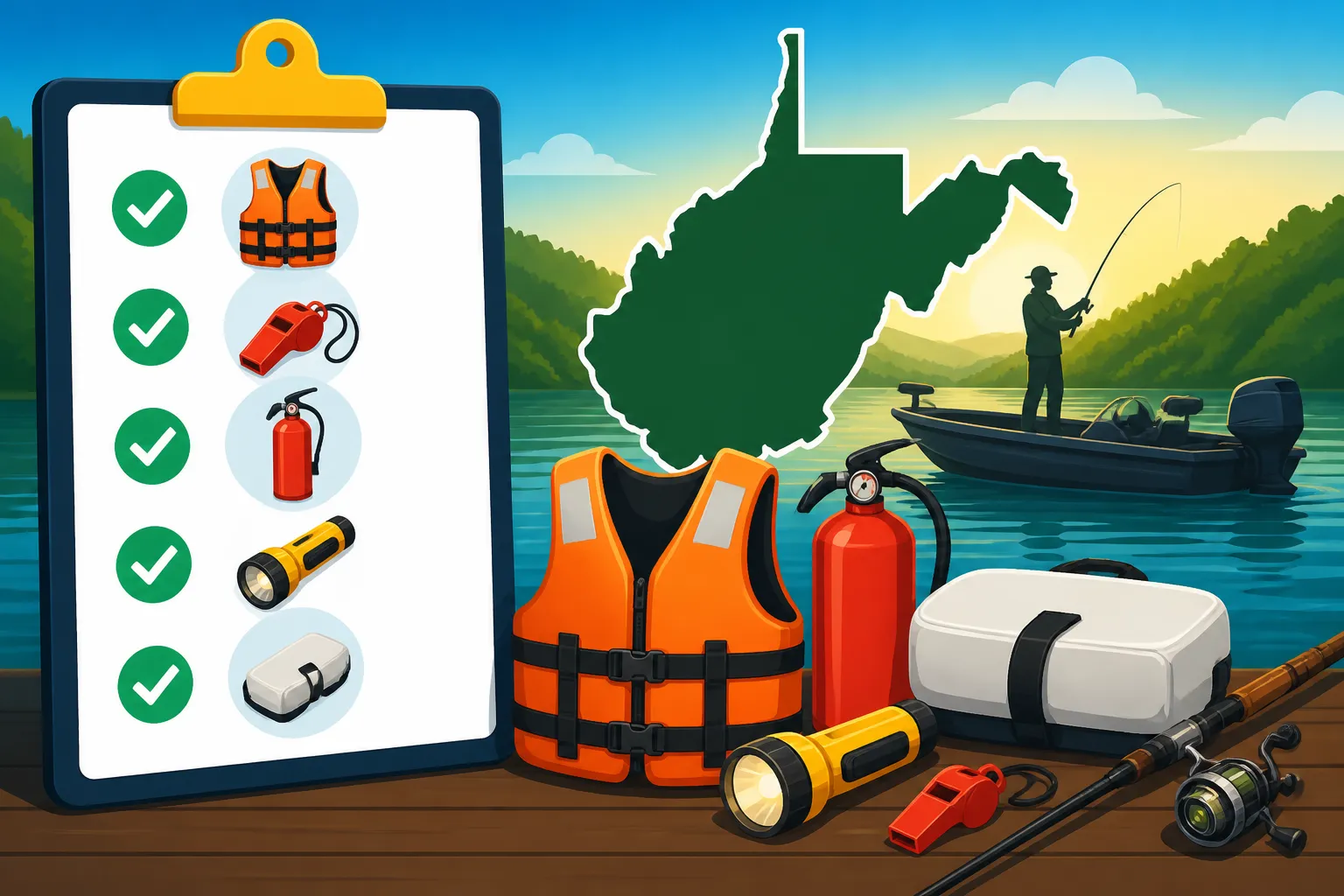
This is perhaps the most critical item on any boat safety checklist. In West Virginia, every vessel must carry at least one U.S. Coast Guard-approved wearable PFD for each person on board. And for vessels 16 feet or longer (excluding canoes and kayaks), you also need one throwable PFD (Type IV) in addition to the wearable ones.
- Wearable PFDs (Types I, II, III, V): These are designed to be worn and provide buoyancy to keep a person afloat. It's crucial that each PFD is in good, serviceable condition, meaning no rips, tears, or missing straps, and it must be properly sized for the intended wearer. This is especially important for children. West Virginia law specifically states that children under 13 years of age must wear a PFD at all times while on any vessel, unless they are inside a fully enclosed cabin. This isn't just a suggestion; it's a strict rule to protect our youngest adventurers. There are many comfortable options available, and you can find a wide variety of Coast Guard-approved PFDs on Amazon, ensuring you get the right fit for everyone. For detailed requirements, check out Life Jacket Requirements for West Virginia Boaters.
- Throwable PFDs (Type IV): These are not meant to be worn but are designed to be thrown to a person in the water to help them stay afloat until they can be rescued. Common examples include ring buoys or buoyant cushions. While they don't count towards the wearable PFD requirement, they are a vital extra layer of safety, particularly on larger boats where a person might fall overboard far from the boat.
| PFD Type | Description | Common Use Cases | Key Feature |
|---|---|---|---|
| Type I | Offshore Life Jacket | Rough/remote waters, extended survival | Highest buoyancy, turns unconscious wearer face up |
| Type II | Near-shore Vest | Calm waters, good for general recreational use | Good buoyancy, may turn unconscious wearer face up |
| Type III | Flotation Aid | Calm waters, continuous wear, sports | Comfortable, good for water sports, wearer must actively turn face up |
| Type IV | Throwable Device | Auxiliary to wearable PFDs (not worn) | Designed to be thrown, not worn |
| Type V | Special Use Device | Specific activities (e.g., kayaking, work vests) | Designed for specific uses, often inflatable; must be worn to be counted |
Fire Extinguishers
Fire on a boat, especially a motorized one, is a terrifying prospect. Fuel, oil, and electrical systems all present fire hazards. Because of this, motorized vessels must carry at least one U.S. Coast Guard-approved fire extinguisher.
- Requirements: The specific class and size of extinguisher (B-I or B-II) depend on the length of your boat and whether it has fixed extinguishing systems in machinery spaces. Generally, most recreational motorboats under 26 feet will require one B-I type extinguisher. The extinguisher must be readily accessible, fully charged, and in good working order. It's not enough to simply have it on board; you need to know where it is and how to use it in an emergency. Regularly check the pressure gauge and ensure the seal is intact.
Sound-Producing Devices
Communication is crucial on the water, especially in conditions of reduced visibility, when signaling distress, or navigating around other vessels. Every boat, regardless of size, needs a sound-producing device.
- Functionality: For boats 39.4 feet (12 meters) or longer, a whistle and a bell are required. For smaller boats, a simple whistle or horn is sufficient. This could be a mouth-blown whistle attached to your PFD or a handheld air horn. The key is that it must be capable of producing an efficient sound signal audible for at least one-half nautical mile. This allows you to signal your presence to other boaters, warn of potential hazards, or call for help.
Visual Distress Signals
When you're out on the vast waters, and an emergency strikes, you need a way to signal for help that can be seen from a distance, particularly if you find yourself stranded after dark. Visual distress signals are your lifeline in such situations.
- Day and Night Signals: All boats operating on coastal waters or the Great Lakes (though West Virginia is an inland state, it's good practice to understand these broader requirements as some navigable rivers connect) at night, or at any time on certain federally regulated waters, must carry U.S. Coast Guard-approved visual distress signals for both day and night use. While West Virginia's inland waters typically don't fall under the mandate for flares for most recreational boats, it is highly recommended to carry them, especially if you're venturing out on larger bodies of water like the Ohio River or New River Gorge. Options include pyrotechnic flares (which have expiration dates and must be replaced) or non-pyrotechnic signals like an orange distress flag (for daytime) or an electric distress light (for nighttime). These items are invaluable for attracting attention when you need it most.
Additional Equipment Based on Vessel Type and Size
The blanket requirements are just the starting point. Depending on your boat's specific characteristics and how you plan to use it, you'll need to consider additional equipment. This often surprises new boaters, who might think a basic setup is enough for all scenarios.
Navigation Lights for Night Operations
If you plan to be on the water between sunset and sunrise, or during periods of restricted visibility (like fog or heavy rain), you must have proper navigation lights. This is vital for preventing collisions and ensuring you can be seen by other vessels.
- Types of Lights: The specific configuration of lights depends on your boat's size and propulsion. Generally, motorboats require a white masthead light, a stern light, and colored sidelights (red for port, green for starboard). Unpowered vessels like canoes, kayaks, and rowboats operating at night only need to have an all-around white light (like a flashlight or lantern) ready to display to avoid collisions. The goal is clear: make your presence and direction of travel known to others. Operating a boat without proper lighting at night is incredibly dangerous and illegal.
Anchors and Anchor Lines
An anchor might seem like an optional comfort item, but it can be a crucial safety tool, especially on rivers with strong currents or larger lakes where you might need to hold position in windy conditions or during an emergency.
- Safety and Utility: While not always strictly required by law for all small vessels, having an anchor and sufficient anchor line is highly recommended. Imagine a mechanical failure in a strong current; an anchor could prevent you from drifting into dangerous rapids or obstacles. Ensure your anchor is appropriately sized for your boat and the bottom conditions you expect, and that you have enough line (typically 7:1 scope, meaning 7 feet of line for every foot of water depth). This is especially true if you plan on fishing in areas with current, or on large lakes like Summersville Lake.
Oars or Paddles
For smaller vessels, or any boat under power that could experience engine failure, a means of manual propulsion is a smart safety addition.
- Backup Propulsion: If your boat is not legally required to have an anchor, or even if it is, having a set of oars or a paddle (or two, for a canoe or kayak) provides a reliable backup in case your engine quits or you run out of fuel. It's surprising how often this situation arises, and being able to paddle back to shore or a safe harbor can save you from a stressful, and potentially dangerous, situation. Even a single paddle can be a lifesaver for smaller boats.
Venting and Backfire Flame Arrestors for Certain Motorized Vessels
These requirements apply specifically to motorboats with enclosed engine compartments, helping to prevent potentially explosive situations.
- Fuel System Ventilation: Boats with gasoline engines and enclosed engine compartments must have a ventilation system to remove explosive fumes. This typically involves an exhaust blower and intake vents. The blower should be operated for at least four minutes before starting the engine and whenever operating at slow speeds.
- Backfire Flame Arrestors: All gasoline engines (except outboards) must be equipped with a U.S. Coast Guard-approved backfire flame arrestor on the carburetor or fuel-injection system. This device is designed to prevent flames from escaping the engine in the event of a backfire, significantly reducing the risk of a fire or explosion in the engine compartment. Regularly check these components for cleanliness and proper function.
Keeping Your Equipment Ready and Compliant
Simply purchasing the equipment isn't the end of your responsibility. Just like your fishing reels need maintenance, your safety gear needs regular attention to ensure it's ready when you need it most. This proactive approach saves you headaches and, more importantly, keeps you safe.
Regular Inspections and Maintenance
Think of your safety gear as critical tools, not just items to check off a list. They need to be in tip-top shape.
- PFDs: Check PFDs for tears, mildew, or extreme fading. Ensure all buckles, zippers, and straps are functional. If you have inflatable PFDs, verify they are properly armed and the CO2 cartridge is still valid. Give them a quick rinse with fresh water after each use and allow them to air dry completely before storing to prevent mildew. Store them in a dry, accessible place, not crammed into a wet locker where they can degrade quickly.
- Fire Extinguishers: Check the pressure gauge periodically to ensure it's in the green "charged" zone. Look for any signs of corrosion or damage to the cylinder or hose. Shake it occasionally to prevent the powder from compacting. Note the expiration date and replace it as needed.
- Visual Distress Signals: Pyrotechnic flares have expiration dates, usually 42 months from the date of manufacture. Make sure yours are current and stored in a cool, dry place. If you use an electronic light, ensure its batteries are charged and tested before each outing.
Establishing a routine, perhaps at the start of each fishing season or before any major trip, to inspect all your gear can make a huge difference. Consider checking out products on Amazon for replacement parts or new safety gear to keep your boat compliant.
Understanding Different Equipment Classes
The world of boat safety equipment can seem like a confusing maze of different "classes" or "types." This applies not only to PFDs, as we discussed, but also to fire extinguishers and other items. Each class signifies a different level of performance or applicability.
- PFD Types: As outlined in the table above, different PFD types are designed for different scenarios. A Type I is for offshore, where rescue might be delayed, while a Type III is more comfortable for constant wear during activities like kayaking or fishing on calmer waters. Always ensure the type you carry is appropriate for your boating activities and meets the minimum requirements for your vessel size and the number of passengers.
- Fire Extinguisher Classes: Fire extinguishers are classified based on the types of fires they are designed to put out (A for ordinary combustibles, B for flammable liquids, C for electrical fires). Marine extinguishers are typically B-I or B-II, indicating they are suitable for flammable liquid fires. Understanding these classifications ensures you have the right tool for the job if a fire breaks out.
By understanding these classifications, you can make informed decisions when purchasing or inspecting your safety equipment, ensuring that it is not only compliant but also genuinely effective in an emergency.
Where to Acquire Compliant Gear
Getting your hands on the right equipment is usually straightforward, but it's important to choose reputable sources to ensure you're getting U.S. Coast Guard-approved items.
- Marine Supply Stores: Dedicated marine supply stores like West Marine or local bait and tackle shops often stock a full range of approved safety equipment. The staff at these stores can also be a valuable resource for answering specific questions about West Virginia regulations or recommending the best gear for your particular boat.
- Online Retailers: Websites like Amazon offer a vast selection of boat safety equipment, from PFDs to fire extinguishers and navigation lights. When purchasing online, always double-check that items are U.S. Coast Guard-approved and read reviews to ensure quality. It's a convenient way to compare options and find exactly what you need.
- Department Stores/Sporting Goods: Larger department stores or sporting goods retailers might carry basic safety gear like PFDs and whistles. Just make sure the items explicitly state they are U.S. Coast Guard-approved.
No matter where you choose to purchase your gear, always verify that it meets current U.S. Coast Guard and West Virginia DNR standards. This due diligence is part of being a responsible boater. For information on other aspects of boating, such as how to obtain your West Virginia Boater Education Certificate Requirement, or the nuances of West Virginia Boat Registration Requirements, it's always worth consulting official resources. Remember, the goal is always to have a safe and enjoyable time on the beautiful waters of West Virginia!
Disclaimer
The information provided in this guide is for general informational purposes only and does not constitute legal advice. Boating laws and regulations are subject to change. Always consult the most current official West Virginia Division of Natural Resources (DNR) regulations or contact the WV DNR directly for the most accurate and up-to-date requirements.