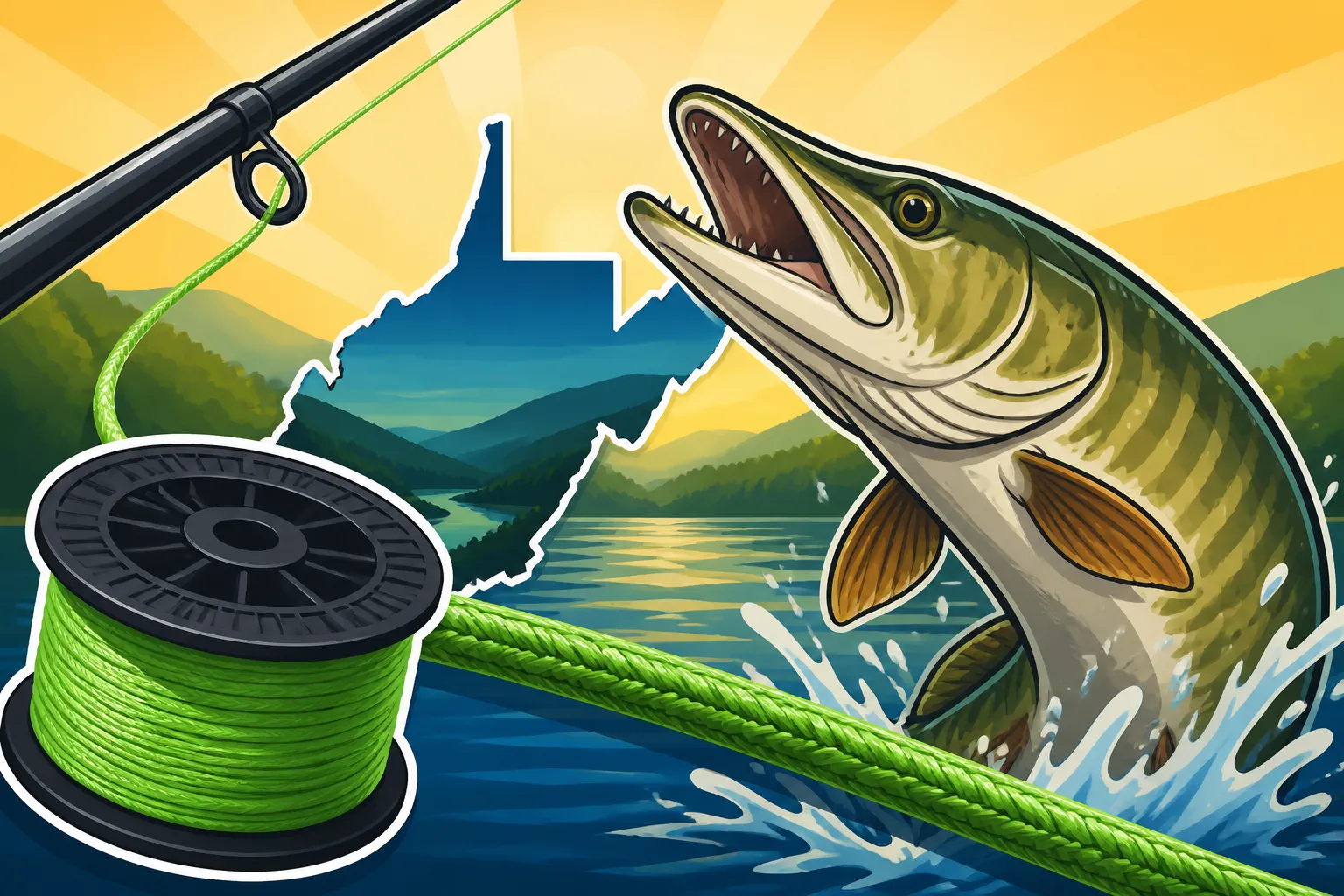
Best braided line for muskie fishing
There's nothing quite like the thrill of a muskie strike in West Virginia, but for many anglers, the fight is over before it even begins due to equipment failure. Choosing the right fishing line is absolutely critical when you're targeting these apex predators, and braided line is often the unsung hero that ensures you land that fish of a lifetime. This comprehensive guide will walk you through everything you need to know about selecting and using the best braided line for your muskie adventures in the Mountain State, helping you tackle everything from the powerful runs to the abrasive riverbeds with confidence.
Why Braided Line is a Muskie Angler's Best Friend
When you're chasing muskie, every single detail matters. These fish are often called "the fish of 10,000 casts" for a reason – they're notoriously hard to hook, and when you do, they fight with an unparalleled ferocity. That's why your line choice isn't just a preference; it's a strategic decision. Braided line offers distinct advantages that make it indispensable for muskie fishing.
The Power and Sensitivity Advantage
Imagine feeling a subtle tap in 20 feet of water, or the explosive, boat-side strike that nearly rips the rod from your hands. Braided line makes both of these scenarios manageable. Its near-zero stretch is a game-changer. Unlike monofilament or even fluorocarbon, which can stretch significantly, braid transmits every vibration, every subtle change in lure action, and every gentle bump directly up your rod and into your hand. This heightened sensitivity means you can detect even the most hesitant takes, which is vital when muskie are finicky.
When a muskie commits, that lack of stretch translates into an incredibly powerful and instantaneous hookset. You don't lose energy to line stretch; all your force is concentrated on driving those oversized treble hooks deep into the muskie's bony mouth. This direct connection is crucial in West Virginia's diverse muskie waters, from the deep, current-swept pools of the New River to the often murky, snag-laden flows of the Little Kanawha. Whether they nip at a bucktail or absolutely crush a topwater, you'll know it immediately and have the power to react.
Durability Against Tooth and Structure
Muskie possess a mouth full of razor-sharp teeth, and their natural habitats in West Virginia are typically rugged, featuring everything from submerged timber and rocky outcroppings to bridge pilings and dense weed beds. These environments are brutal on fishing line, and standard monofilament often doesn't stand a chance.
Braided line, woven from multiple strands of high-strength fibers, offers exceptional resistance to abrasion. It's far less susceptible to being cut or frayed when dragged across sharp rocks, submerged logs, or, most importantly, a muskie's gill plate or toothy maw during a fight. This inherent toughness minimizes the risk of heartbreaking break-offs, saving you from losing expensive lures and, more painfully, the biggest fish of your life. The durability of braid provides immense confidence, allowing you to cast into heavy cover where muskie love to ambush prey, knowing your line can handle the abuse. It's a key factor in ensuring a successful retrieve from those tight, snaggy spots that hold the biggest fish.
Key Considerations for Muskie Braided Line
Choosing the right braided line for muskie isn't just about grabbing the strongest spool on the shelf. There are several nuanced factors that can significantly impact your success and overall fishing experience. Thinking through these details before you buy can make all the difference on the water.
Pound Test and Diameter: Finding the Sweet Spot
This is perhaps the most critical decision when selecting braided line for muskie. Go too light, and you risk immediate break-offs on powerful strikes, snags, or during intense fights. Go too heavy, and you might sacrifice casting distance and ease of use, which can lead to fatigue over a long day of throwing heavy baits.
For serious muskie anglers, the sweet spot for braided line generally falls within the 65 lb to 100 lb test range. Here’s a breakdown of what that means:
- 65-80 lb Test: This range is popular for its balance of strength and castability. It's often preferred for casting smaller to medium-sized bucktails, crankbaits, or glide baits where longer casts are beneficial. The slightly thinner diameter allows for less wind resistance and can make repetitive casting less taxing. It's a great choice for general muskie fishing across many West Virginia waters.
- 80-100 lb Test: When you're throwing massive baits, fishing extremely heavy cover, or specifically targeting truly enormous, trophy-class muskie, stepping up to 80 lb or even 100 lb test provides maximum confidence. This heavier line offers superior strength for wrenching fish out of snags and withstanding prolonged, powerful fights. While it might reduce your casting distance slightly with lighter baits, the peace of mind it offers when that giant hits is priceless.
Remember, one of braid's biggest advantages is its strength-to-diameter ratio. A 65 lb braided line is still significantly thinner than a monofilament line of comparable breaking strength, allowing you to spool more line onto your reel and experience less drag in the water. When browsing options at your local tackle shop or online retailers like Bass Pro Shops or Amazon, pay attention to the stated diameter for a given pound test, as it can vary slightly between brands.
Color Choice: Does it Really Matter?
The color of your braided line is a perennial topic of debate among muskie anglers. While some believe it's irrelevant with a leader, others swear by specific hues. Here’s how different colors can affect your fishing:
- High-Visibility (High-Vis) Colors (e.g., bright yellow, neon green): These lines are designed to be easily seen by the angler. This visibility is incredibly useful for several reasons:
- Bite Detection: You can visually detect subtle line movements that indicate a strike, even before you feel it through the rod.
- Lure Tracking: It helps you monitor your lure's position, especially important when watching for a "follow" at the boat or navigating cover.
- Line Management: It makes untangling backlashes (if they happen!) much easier. High-vis lines are particularly popular in low-light conditions (dawn, dusk, or cloudy days) or in murky West Virginia waters where visibility is already limited.
- Low-Visibility (Low-Vis) Colors (e.g., dark green, brown, black): These lines are intended to blend into the water, theoretically making them less detectable by wary fish. While a heavy fluorocarbon or wire leader usually mitigates line visibility concerns for muskie, some anglers still prefer low-vis main lines, especially if they use shorter leaders or are fishing in extremely clear water.
- Multi-Color Lines: These lines feature alternating colors (e.g., every 10 or 25 feet) and are primarily used to help anglers gauge casting distance and depth. This can be particularly beneficial for specific techniques like trolling, where precise depth control is crucial, or when trying to hit particular structure zones.
Ultimately, with a robust leader in place (which is non-negotiable for muskie), the color of your main braided line is more about angler preference and what helps you fish most effectively. If you find seeing your line helps you detect bites and manage your lure, go with a high-vis option.
The Importance of Smoothness and Castability
Muskie fishing is a physically demanding endeavor. You're often making hundreds, if not thousands, of casts in a day, often with large, air-resistant lures. This is where the physical characteristics of your braided line beyond just its strength become critically important.
A smooth, round-profile braided line will significantly enhance your casting performance and reduce fatigue. These lines glide through your rod guides with minimal friction, resulting in longer, more effortless casts. This extra distance can sometimes be the difference between reaching a productive fishing spot and falling short, especially on wide rivers or large lakes like Summersville.
Conversely, a poorly constructed braid might have a flatter or uneven profile. These lines create more friction as they pass through the guides, leading to shorter casts, increased effort, and a higher propensity for dreaded wind knots or backlashes, which can quickly ruin a fishing day. Look for descriptions like "super smooth," "round braid," or "performance coated" when selecting your line. A well-constructed, castable braid ensures that you can fish hard all day without excessive strain, allowing you to focus on the presentation and the potential strike, rather than battling your tackle, whether you're casting on the Cranberry River or targeting specific laydowns on Cheat Lake.
Top Braided Line Features for West Virginia Muskie
Beyond the basic considerations, certain features in braided line are particularly advantageous for West Virginia's challenging muskie fisheries. These attributes directly address the unique environmental factors and the brute strength of the fish you're targeting.
Abrasion Resistance for Rocky Rivers
West Virginia's rivers are renowned for their rugged beauty and, for anglers, their equally rugged bottoms. Many prime muskie habitats are characterized by rocky streambeds, submerged boulders, ledges, and scattered woody debris. These features provide ideal ambush points for muskie, but they are also unforgiving on fishing line.
A braided line with superior abrasion resistance is not merely a nice-to-have; it's an absolute necessity. Some braided lines are manufactured with a tighter weave or a special coating specifically designed to withstand constant rubbing and chafing against rough surfaces. This enhanced durability significantly reduces the chances of your line fraying or being cut during a fight, especially when a muskie dives into cover or when your line accidentally brushes against a sharp rock during a cast or retrieve.
Without excellent abrasion resistance, you'd constantly be retying, inspecting your line, and living in fear of a catastrophic break-off. A tough, resilient braid gives you the confidence to fish those notoriously snaggy, high-percentage spots where big muskie often lurk, knowing your line can handle the abuse. This is particularly true on legendary West Virginia muskie waters like the New River, which is famous for its rocky structure and powerful currents.
Knot Strength and Shock Absorption
While braided line is celebrated for its incredible tensile strength, that strength is only as good as the knot you tie. For muskie fishing, where every connection is under immense stress, exceptional knot strength in your braided line is paramount. The point where your main line connects to your leader is often the weakest link in your entire setup, and a strong, reliable knot that doesn't slip or compromise the line's integrity is non-negotiable.
Look for braided lines that are known for holding knots securely. Popular choices among muskie anglers for connecting braid to a fluorocarbon leader include the FG knot, Alberto knot, or a strong uni-to-uni knot. Practice tying these knots until they are perfect; a poorly tied knot can reduce your line's breaking strength by a significant percentage.
Regarding shock absorption, it's true that braided line has minimal to no stretch. This is fantastic for sensitivity and hook-setting power. However, the system's overall shock absorption comes from other components of your tackle, primarily your rod's action and your reel's drag system. Your muskie rod should have enough backbone to handle heavy lures and powerful fish, but also enough flex in the tip to absorb sudden, violent headshakes without snapping the line. A properly set drag on your reel is also crucial; it allows the line to give a little under extreme pressure, preventing break-offs when a muskie makes a powerful run or a sudden, unexpected lunge. The braided line's role is to provide unwavering connection and power, relying on your rod and reel to cushion the blows. This robust combination ensures you stay connected to that trophy fish. You'll find great options for these components at places like Bass Pro Shops and on Amazon.
Rigging Your Muskie Setup with Braided Line
Using braided line for muskie is just one piece of the puzzle. How you integrate it into your overall setup, particularly with leaders and proper maintenance, is equally vital for success and preventing heartbreak on the water.
The Crucial Role of Leaders
Let's be absolutely clear: you never, ever tie braided line directly to a muskie lure. A muskie's teeth are incredibly sharp, and even the toughest braid will be severed instantly. This is why a heavy-duty leader is not optional; it's absolutely essential. The leader serves several critical functions:
- Bite Protection: It provides a sacrificial barrier against those formidable teeth.
- Abrasion Resistance: It adds another layer of protection against submerged structure.
- Lure Action: In some cases, the material and stiffness of the leader can subtly influence a lure's presentation.
Muskie leaders typically come in two main materials:
- Heavy Fluorocarbon: This is a very popular choice, often in the 80 lb to 150 lb test range. Fluorocarbon is nearly invisible underwater, which can be an advantage in clear West Virginia lakes and rivers, making it less likely to spook wary muskie. It also offers excellent abrasion resistance and a slight amount of stretch, which can act as a shock absorber during violent strikes and headshakes. The stiffness of heavy fluorocarbon also helps prevent fouling with large treble hooks.
- Wire Leaders: These leaders (made from steel, titanium, or other alloys) offer the ultimate bite-proof protection. While they might be slightly more visible than fluorocarbon, their strength against muskie teeth is unmatched. Wire leaders are often used with large, aggressive baits or when fishing in areas known for toothy fish. However, they can sometimes kink after a fight or if a lure gets fouled, requiring replacement.
When selecting your leader, consider its length. Muskie leaders are typically 12 to 36 inches long, depending on the lure size and presentation. The connection between your braided main line and your leader must be incredibly strong and reliable. This is where knots like the FG knot, Alberto knot, or a modified uni-to-uni knot shine. Many anglers also incorporate a heavy-duty snap swivel at the end of the leader to easily change lures and prevent line twist. For more details on the other components you'll need, check out our guide on Best Muskie Gear for West Virginia Rivers.
Proper Spooling and Maintenance
Even the best braided line won't perform optimally if it's not properly spooled and maintained. Taking a few extra steps can drastically improve your fishing experience and prolong the life of your line.
- Proper Spooling: When putting new braided line onto your reel, ensure it's spooled on tightly and evenly. Loose wraps can lead to "digging in" under pressure, which causes backlashes and can compromise line strength. Many reputable tackle shops, including those affiliated with Bass Pro Shops, offer line spooling services that ensure perfect tension. If you're doing it yourself, use a line spooler or have a friend apply steady pressure to the spool as you wind it onto your reel. Be careful not to overfill your spool, as this often leads to line spilling off and forming tangles, especially with braided line. Conversely, underfilling can lead to shorter casts.
- Regular Inspection: After every fishing trip, and especially after fighting a fish or getting snagged, carefully inspect the first several feet of your braided line for any signs of fraying, nicks, or discoloration. Even small imperfections can become major weak points under the strain of a muskie fight. If you find any damage, cut back the affected section and re-tie your leader. This simple habit can prevent many lost fish and lures.
- Cleaning and Rinsing: Muskie fishing often involves exposure to various elements – silt, grime, and sometimes saltwater if you're venturing to different regions. A quick rinse of your reel and line with fresh water after each outing will remove abrasive particles and prolong the life of both your line and your reel components.
- Line Rotation/Replacement: Braided line is durable, but it's not indestructible. The portion of line closest to your leader takes the most abuse. Periodically, you can reverse your line on the spool to bring the less-used section forward, effectively extending its life. However, depending on how often you fish and the conditions you encounter, plan to replace your braided line every one to two seasons. It's a small investment compared to the cost of lures and the potential heartache of losing a trophy muskie due to old, weakened line.
By understanding and implementing these crucial aspects of rigging and maintenance, you'll maximize the performance of your braided line, ensuring your setup is always ready for that next legendary West Virginia muskie encounter.
| Feature | Description | Muskie Fishing Implication |
|---|---|---|
| Pound Test | Breaking strength of the line. | 65-100 lb recommended for power, lure control, and fighting big fish without breakage. |
| Diameter | Thickness of the line for a given strength. | Thinner diameters (for high strength) mean more line capacity, longer casts, and less water resistance, reducing casting fatigue. |
| Color | Visible pigment of the line. | High-vis aids tracking/bite detection, especially in low light or murky water. Low-vis preferred by some, but a leader is key. |
| Abrasion Resistance | Line's ability to withstand rubbing and chafing. | Critical for West Virginia's rocky rivers, submerged timber, and the muskie's teeth/gills; prevents fraying and break-offs. |
| Smoothness | How freely the line glides through rod guides and off the spool. | Improves casting distance and accuracy, reduces wind knots and backlashes, essential for repetitive muskie casting. |
| Knot Strength | Ability of line to hold a knot securely without slipping or compromising strength. | Essential for reliable leader connections, preventing lost fish and expensive lures; requires proper knot-tying technique. |
| Stretch | How much the line elongates under tension. | Near-zero stretch provides ultimate sensitivity for feeling bites and powerful, instant hooksets, crucial for bony-mouthed muskie. |
| Leader Requirement | A separate, heavy-duty line attached to the main line before the lure. | Absolutely mandatory for muskie to protect against their sharp teeth and provide abrasion resistance. |
Disclaimer
This article is for general informational purposes only and does not constitute professional advice. Laws, prices and regulations vary by location and change over time. Consult a qualified professional for guidance on your specific situation.