Best fly line for small mountain streams
Oh, the sheer joy – and sometimes, the sheer frustration – of fishing West Virginia's small mountain streams! You know the ones: those intimate ribbons of water tumbling over rocks, weaving through dense rhododendron thickets, and whispering secrets only the brook trout truly understand. But trying to cast a traditional, heavy fly line in those tight quarters, with branches grabbing at your backcast and spooky native fish demanding a feather-light presentation, can feel like trying to thread a needle with a rope. It's a unique challenge that many anglers in the Mountain State face, and choosing the right fly line can make all the difference between a day of tangled frustration and one of delightful success. This guide is all about helping you pick the perfect fly line to conquer those charmingly difficult small stream conditions.
Understanding Small Mountain Streams and Their Unique Challenges
Before we even talk about specific fly lines, it's crucial to really get into the head of what makes our small mountain streams so special, and so tricky. These aren't the wide-open spaces of bigger rivers or lakes where you can bomb out 70-foot casts. No, these are intimate, almost claustrophobic environments that demand a different approach.
The Environment: Tight Quarters and Overhanging Branches
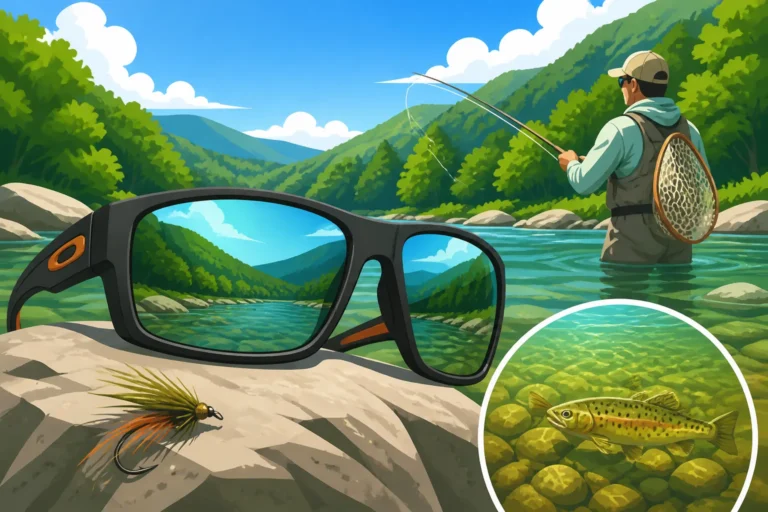
Picture this: you're standing in a crystal-clear freestone stream, water barely up to your shins, surrounded by a verdant tunnel of rhododendron. Above, a canopy of hardwoods filters the sunlight, dappling the water with shadows. You spot a small plunge pool, the kind that just screams "brook trout," but getting a cast to it means navigating a dense obstacle course. There's a fallen log, a low-hanging branch, and a particularly grabby bush right where your backcast should go. This is the reality of many of West Virginia's most beautiful and productive small trout streams.
These tight quarters mean that traditional long, flowing casts are often impossible. You need a line that loads your rod quickly and efficiently with minimal line out, allowing for short, accurate casts underhand, roll casts, or even just flicking your leader and fly out with a little wrist action. Overhanging branches aren't just an annoyance; they're a constant threat to your fly, your leader, and your line. You need a line that can be controlled precisely, even in compromised casting positions, and that won't punish you too severely for a slightly clumsy flick. It's less about power and more about finesse and immediate responsiveness.
Target Species and Presentation Needs
So, who are we chasing in these idyllic, yet challenging, settings? Often, it's our beloved Brook Trout: West Virginia's Native and State Fish. These wild, native beauties are typically smaller than their stocked cousins, incredibly wary, and demand a truly delicate presentation. Sometimes you'll find smaller wild brown trout or rainbows, but the principle remains the same: these fish are spooky.
A heavy, clunky fly line that lands with a splash is a surefire way to send them darting under a rock, ruining your chances. What you need is a line that will turn over a small dry fly or a subtle nymph with grace, allowing it to drift naturally without drag. Accuracy is paramount here; placing a size 16 Elk Hair Caddis precisely into a tiny seam next to a boulder requires a line that responds to every subtle input from your rod. Distance is secondary; a 15-foot cast landed perfectly is infinitely better than a 30-foot cast that spooks the fish. The line needs to actively help you achieve that "soft landing" that imitates a natural insect or a tiny piece of forage drifting in the current.
Key Characteristics of Ideal Fly Line for Small Streams
Now that we've painted a clear picture of the environment and the fish, let's dive into the nitty-gritty of fly line characteristics. Not all fly lines are created equal, and some are definitely better suited for these intimate encounters than others.
Weight-Forward vs. Double Taper: Which Reigns Supreme?
This is often one of the first decisions an angler faces when picking a fly line, and for small streams, it's a big one.
-
Weight-Forward (WF) Lines: These lines have a heavier, more concentrated weight towards the front of the line, tapering down to a thinner running line. They're designed for distance, for punching through wind, and for turning over heavier flies. While a general-purpose WF line might seem versatile, its heavier head can be a disadvantage in close quarters. It often requires more line out of the rod tip to properly load the rod, which is exactly what you don't have when you're hemmed in by foliage. If you try to cast too short with a standard WF, it feels clunky, and the fly often doesn't turn over smoothly. However, it's worth noting that some modern WF lines are specifically designed with shorter, more aggressive front tapers to load rods quickly at close range, often marketed as "creek" or "presentation" specific lines. These can be a good compromise for some.
-
Double Taper (DT) Lines: This is where many small stream aficionados find their sweet spot. A DT line has a symmetrical taper, thickest in the middle and tapering down evenly to both ends. This design is fantastic for delicate presentations and excels at roll casts and short-to-medium distance casting. Because the weight is distributed more evenly, a DT line loads a rod beautifully with very little line out, making those flick-of-the-wrist casts much smoother and more accurate in tight spots. The continuous taper also makes for excellent mending, allowing you to manipulate your line on the water to achieve drag-free drifts, which is critical for fooling wary trout. And a bonus: when one end gets worn, you can simply reverse it on your reel, essentially giving you two lines in one! If you prioritize soft presentation, subtle roll casts, and superior mending ability, a DT line is often the champion for small mountain streams.
Line Weight and Rod Pairing
Just like you wouldn't bring a sledgehammer to drive a finishing nail, you don't want an overly heavy fly line for delicate small stream work. Most anglers fishing West Virginia's small trout streams are using lighter outfits, typically in the 2-weight to 4-weight range. The goal is to perfectly match your fly line weight to your rod's recommended weight.
A line that is too heavy for your rod will feel clunky and might "overpower" it, leading to less accurate casts and a feeling of lost control. A line that is too light won't load the rod effectively, making it difficult to cast even short distances. The magic happens when the line weight and rod weight are in harmony, allowing the rod to flex (load) properly with minimal effort. This makes those quick, accurate casts a joy rather than a chore. Some anglers, particularly those who only fish extremely tight, brushy streams and make almost exclusively short casts, might even consider "overlining" their rod by one weight (e.g., putting a 4-weight line on a 3-weight rod). This can help load the rod even faster for very short, close-range presentations, but it's a personal preference and can sacrifice some finesse at slightly longer distances.
Taper Design: Short Front Taper for Delicate Deliveries
Beyond just WF or DT, the taper itself—how the line's diameter changes from thick to thin—is paramount. For small streams, you want a gentle, extended front taper. This is the section of line directly connected to your leader.
Why is this important? An aggressive, blunt front taper, often found on lines designed for heavy flies or windy conditions, will crash down onto the water surface with too much force. It creates a "splat" that sends fish scattering. A gentle, elongated front taper, on the other hand, allows the energy from your cast to dissipate smoothly, laying your leader and fly down softly and subtly, like a feather drifting onto the water. This delicate delivery is absolutely essential when you're targeting those hyper-aware brook trout in clear, shallow water. Look for lines specifically marketed with "presentation" or "delicate" tapers. They might not throw a mile, but they'll drop a fly with the grace of a falling leaf.
Material, Color, and Practical Considerations
Beyond the core design, other factors play a significant role in how your fly line performs and holds up to the rigors of stream fishing.
Line Material and Core Construction
Modern fly lines are typically made with a synthetic core (either braided multifilament or monofilament) encased in a PVC or polyurethane coating. This coating is what gives the line its flotation, slickness, and durability.
- Slickness: A slick line shoots through the rod guides with less friction, making casting easier, especially when you need to extend a short cast or mend quickly. Manufacturers often incorporate special additives or treatments to enhance slickness.
- Floatation: For dry fly fishing and nymphing with indicators, a high-floating line is critical. It keeps your line on the surface, making it easier to mend, detect subtle strikes, and pick up for the next cast. Look for lines that boast excellent floatation, especially in the tip section.
- Core Material: Braided cores tend to be more supple and offer less stretch, which can translate to better feel and more direct hooksets. Monofilament cores can offer more sensitivity but might have a bit more stretch. For most small stream applications, a supple, low-stretch line is preferred for its feel and ease of handling.
Line Color: Stealth vs. Visibility
This is a fun debate among anglers! Do you want a line that blends in or one that stands out?
- Low-Visibility Lines: Some anglers swear by dull, natural colors like olive, grey, or tan, believing that a less conspicuous line is less likely to spook wary trout. While it's true that brightly colored lines can cast shadows or create reflections, it's generally accepted that if your leader is properly tapered and long enough, the fish won't see your fly line anyway. The last few feet of your leader are what truly matter for stealth.
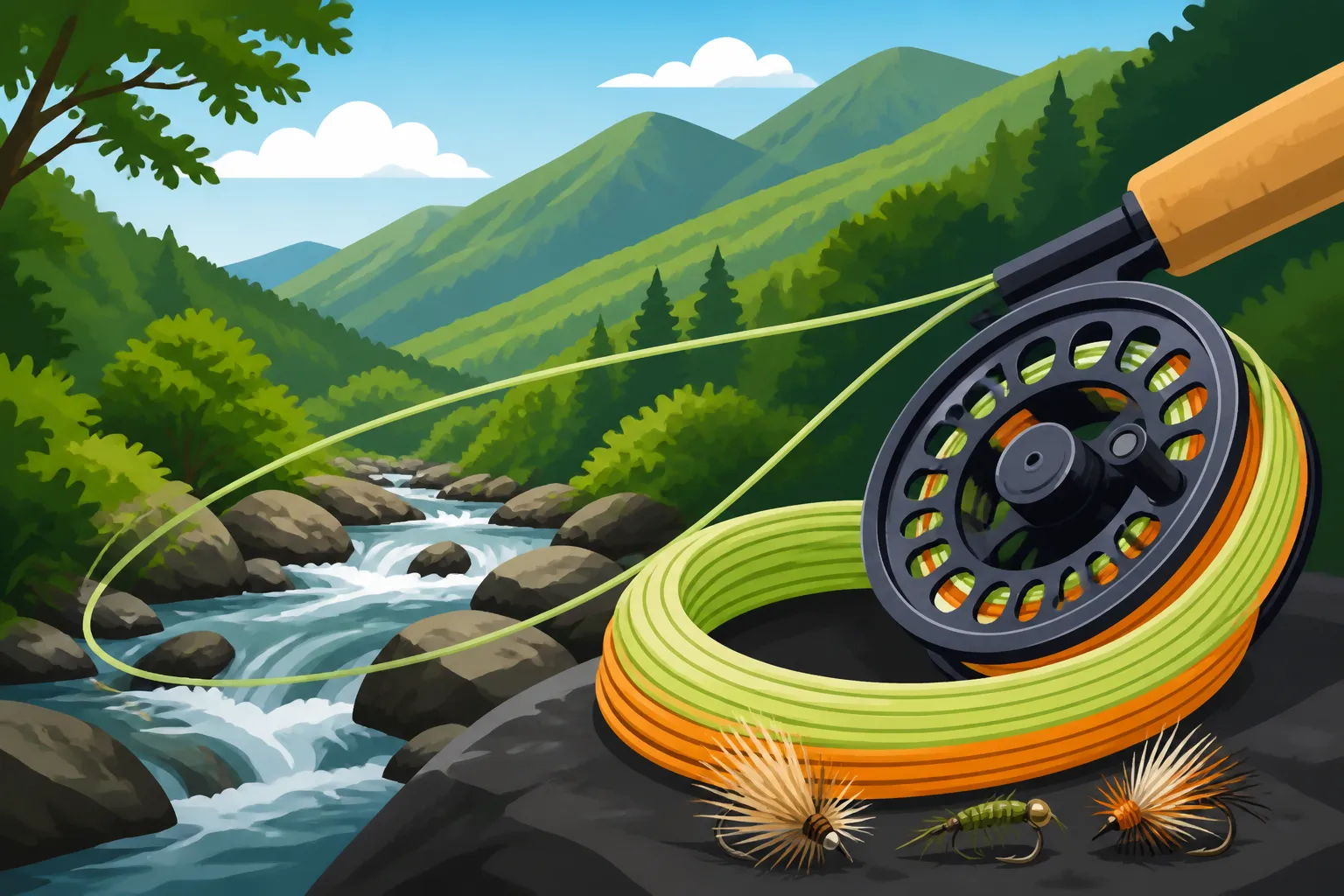
- High-Visibility Lines: On the flip side, many small stream anglers actually prefer bright, visible colors like chartreuse, orange, or even two-tone lines. Why? Because it makes tracking your line on the water so much easier! When you're fishing small flies in broken water, or trying to achieve a perfect drag-free drift with a tiny nymph, being able to clearly see exactly what your line is doing on the surface is a huge advantage. You can mend more precisely and detect those subtle takes that might otherwise go unnoticed. A good compromise is a line with a brightly colored running line for visibility, but a more subdued front taper for stealth where it matters most, near the fly. Consider what helps you fish more effectively.
Durability and Maintenance
Small streams are not always kind to fly lines. Rubbing against rocks, sliding over logs, and snagging on branches are all part of the game. You want a line with a durable coating that can stand up to this abuse without cracking or losing its slickness prematurely.
Regular maintenance is also key. Dirt, grit, and algae can build up on your fly line, reducing its floatation and making it sticky. Carry a small line cleaning pad and some line dressing with you, especially if you're out for an extended period or fishing frequently. A clean, well-maintained line will perform much better, last longer, and make your casting far more enjoyable. Products like Scientific Anglers' fly line dressings or Orvis line cleaners can do wonders for extending the life and performance of your line. You can find these at sporting goods stores or online retailers like Bass Pro Shops or Amazon.
Top Picks and Where to Find Them
So, what kind of fly lines should you be looking for specifically? While I won't name exact models (as they change so frequently), I can guide you to the types of lines that excel on our Mountain State gems.
Recommended Fly Line Brands and Types
When you're browsing for fly lines, keep an eye out for brands that are known for quality and innovation in the fly fishing world. Manufacturers like Scientific Anglers, Rio, Cortland, and Orvis all produce excellent fly lines that would be suitable.
Look for lines that are specifically designed for:
- "Creek" or "Small Stream" designations: These lines are often WF but feature shorter, more aggressive front tapers to load quickly and delicately at close range, or are built as DT lines. They acknowledge the challenges of tight casting.
- "Presentation" or "Delicate" tapers: These terms indicate a more gradual front taper designed for soft landings, perfect for wary trout.
- Double Taper (DT) lines: As discussed, a classic DT line in a matching weight for your rod (2wt, 3wt, 4wt) is a superb choice for pure presentation and short-range finesse. Many experienced small stream anglers swear by them for their mending capabilities and soft turnover.
- Lines with integrated "indicators" or two-tone designs: For those who like visibility, these lines often have a high-vis running line and a more subdued front section, giving you the best of both worlds.
When you're ready to buy, remember that you can explore options from reputable sources. Bass Pro Shops and Amazon both carry a wide range of fly lines from various manufacturers, allowing you to compare features and read reviews from other anglers who might be fishing similar conditions. It's always a good idea to check with your local fly shop too; they often have specific recommendations based on local stream characteristics.
Here's a quick comparison of general WF and DT lines for small streams:
| Feature | Weight-Forward (WF) Line (General Purpose) | Double Taper (DT) Line (Classic) |
|---|---|---|
| Loading Speed | Requires more line out to load rod effectively | Loads rod quickly with minimal line out |
| Casting Distance | Excellent for longer casts, punching wind | Best for short to medium casts |
| Delicate Presentation | Can be less delicate at short ranges (unless specialty WF) | Superior for soft landings and delicate turnover |
| Mending Ability | Good, but continuous taper of DT offers more subtle control | Excellent, allows for very fine and precise mends |
| Roll Casting | Good, but DT often performs better for continuous energy transfer | Superior for roll casts and spey-style casts in tight spots |
| Durability/Value | One usable end | Two usable ends (can be reversed when one end wears) |
| Best For | Anglers needing occasional distance, specific WF creek lines | Anglers prioritizing presentation, roll casts, and mending |
The Importance of Your Leader and Tippet
Choosing the best fly line is a huge step, but it's only part of the equation. Even the most perfectly matched fly line won't perform its best without a well-chosen leader and tippet. These are your final, crucial connections to the fly and the fish.
For small stream fishing, you'll generally want a longer leader than you might use on a larger river – often 9 to 12 feet, and sometimes even longer for ultra-spooky fish in clear water. This longer leader helps dissipate the energy of the cast even further, ensuring that only your fly and tippet are landing softly on the water. It also keeps your fly line further from the fish's sight.
Your tippet, the very end section of your leader where you tie on your fly, should be appropriately light. For those tiny dry flies and delicate nymphs often used on small streams, a tippet in the 5X, 6X, or even 7X range is common. The finer tippet not only helps with presentation but also allows the fly to behave more naturally in the current. You can buy pre-made tapered leaders that transition smoothly from thick to thin, or you can tie your own using sections of monofilament or fluorocarbon to achieve custom tapers. Best Tippet Size for Stocked Trout is a good resource, though for wild trout, you'll often go even lighter. Remember, the goal is always a smooth, drag-free drift that fools even the most discerning fish.
So, next time you're gearing up for an adventure into West Virginia's wild and wonderful small streams, give serious thought to your fly line. It's more than just a piece of plastic; it's an extension of your rod, your arm, and your ability to present that fly just right. The right choice will elevate your experience and put more of those beautiful native trout in your net. For more gear insights, check out Best Gear for West Virginia Trout Fishing. And don't forget to practice those tricky roll casts and short-game techniques before you hit the water! For specific stream tactics, you might want to read up on Wading Techniques for West Virginia Trout Streams.
Disclaimer
This article is for general informational purposes only and does not constitute professional advice. Laws, prices and regulations vary by location and change over time. Consult a qualified professional for guidance on your specific situation.