How many trout species live in West Virginia
It's a common question among anglers, especially those new to the beautiful mountain state: just how many different kinds of trout can you actually find finning around in West Virginia's rivers and streams? Many folks assume trout is just "trout," but the reality is a bit more nuanced and incredibly fascinating. This guide is here to clear up that confusion, diving deep into the specific species you'll encounter and offering a better understanding of our cherished coldwater fisheries.
The "Big Three" Trout Species in West Virginia Waters
When we talk about trout in West Virginia, most anglers are thinking about three primary species that dominate our fishing experiences. Each one brings its own unique character, challenges, and beauty to our waterways. While one is truly native, the other two have become beloved and well-established parts of our aquatic landscape through careful stocking and naturalization.
Brook Trout: West Virginia's Native Gem
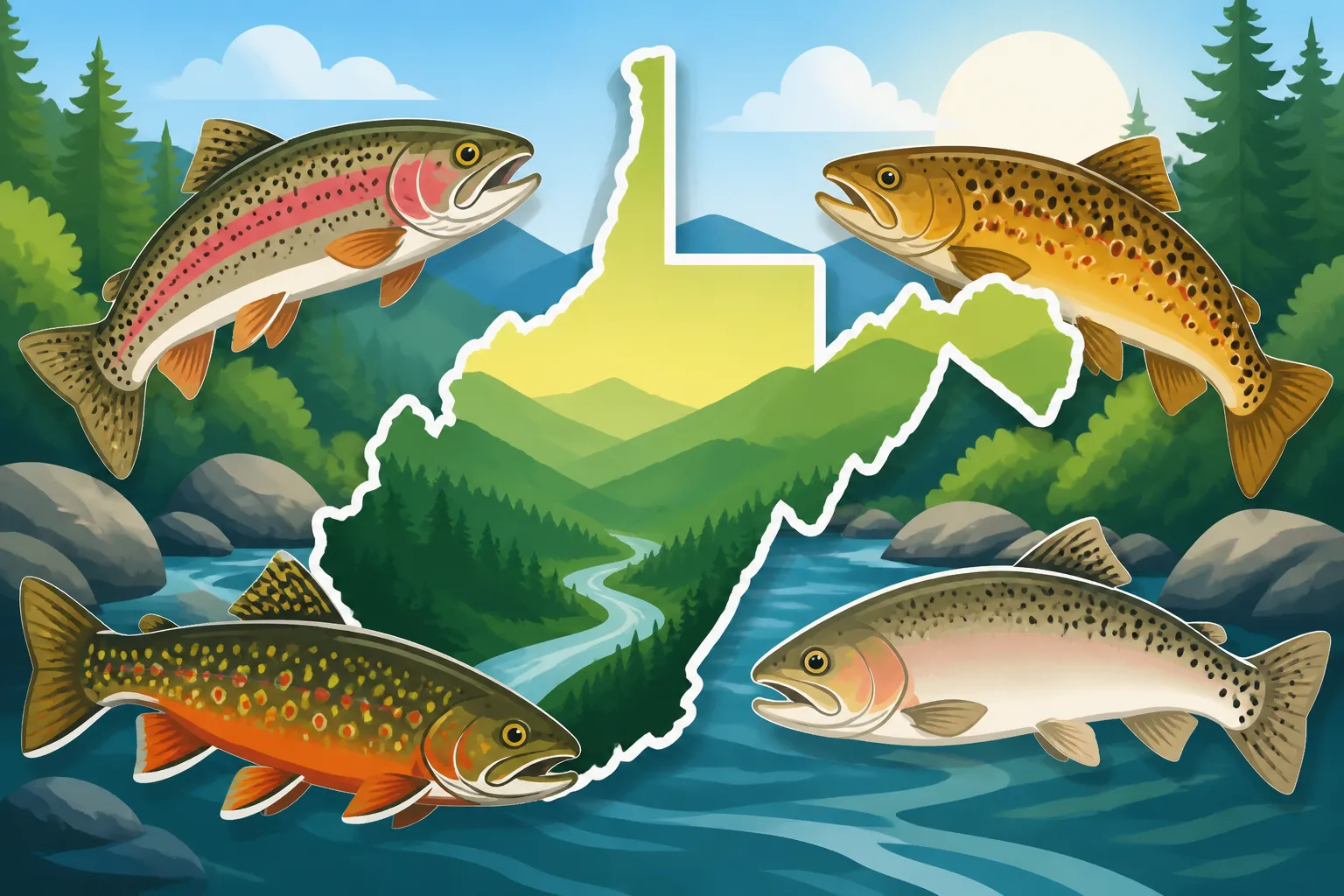
Let's start with the true original, the undisputed king of West Virginia's mountain streams: the brook trout. These stunning fish, with their olive-green backs, intricate vermiculation (worm-like markings), and fiery red-orange bellies often adorned with blue halos around red spots, are truly a sight to behold. What makes them so special is that they are the only trout species truly native to West Virginia. They've called these pristine, cold, high-elevation waters home for millennia.
Fishing for brook trout isn't just about catching a fish; it's an experience rooted in history and wilderness. These fish thrive in the smallest, coldest, and most oxygen-rich headwater streams, often tucked away in remote corners of our national forests, like those found within the Monongahela. They are incredibly sensitive to water quality and temperature, making them excellent indicators of a healthy ecosystem. When you're carefully navigating a tiny stream, making short, precise casts with a light rod, and suddenly a jewel-toned brook trout flashes from beneath a log, it's a connection to the wild heart of West Virginia that few other experiences can offer. Preserving these wild populations is a big deal, and many streams have special regulations to protect them. You can learn more about their importance in our guide on Brook Trout: West Virginia's Native and State Fish.
Rainbow Trout: The Stocking Star
Next up, we have the rainbow trout, arguably the most recognizable and widely distributed trout species in West Virginia. While not native to our state—they originate from the Pacific coast of North America—rainbow trout have become incredibly popular due to their hardiness, aggressive feeding habits, and spirited fight when hooked. They are the backbone of West Virginia's extensive stocking program, with millions of rainbows released into our rivers, lakes, and streams each year.
You'll recognize a rainbow by its distinctive pink or red stripe running horizontally along its silver-sided body, often fading to an olive or greenish-blue back, all covered in small black spots. They adapt well to a variety of water conditions, which is why they're so successful in stocked impoundments and larger rivers. For many families and beginner anglers, the rainbow trout is their first introduction to trout fishing. The thrill of catching one right after a fresh stocking is unparalleled, and it makes trout fishing accessible to everyone, from kids with worms and bobbers to seasoned fly anglers. These fish provide fantastic recreational opportunities and are a major reason why trout fishing is so popular here. If you're curious about where and when these fish are released, check out West Virginia Trout Stocking Hotline and Schedule.
Brown Trout: The Wary, Wild Survivor
Our third main player is the brown trout. Like the rainbow, brown trout are not native to North America, having been introduced from Europe in the late 19th century. However, what makes brown trout so special in West Virginia is their incredible ability to naturalize and establish self-sustaining populations in suitable rivers. While many are stocked, especially as fingerlings to supplement wild populations, they're known for their intelligence, wariness, and often elusive nature, especially the larger, older fish.
Brown trout typically have a golden-brown body with prominent dark spots, often ringed with a lighter halo, and some red spots along their sides. They tend to prefer larger, colder river systems with plenty of cover, such as undercut banks, fallen trees, and deep pools. They are also known for growing to impressive sizes, making them a prize for many trophy hunters. Catching a truly wild, large brown trout from a West Virginia river is a testament to an angler's skill and patience. These fish are masters of their environment, capable of surviving and thriving where other species might struggle. Anglers keen on targeting these wily fish often spend hours dissecting a river, seeking out their hidden lairs. Understanding their habits can give you an edge, which you can read more about in Brown Trout Habits in West Virginia Streams.
Beyond the "Big Three": Unique Variations and Distinctions
While the brook, rainbow, and brown trout form the core of West Virginia's trout fishery, there are fascinating variations and important distinctions that add layers to our understanding of these beautiful fish. It's not always as simple as identifying just three separate species, especially when unique strains or local adaptations come into play.
Golden Rainbow Trout: A Mountain State Original
Perhaps one of the most exciting and visually striking "trout" experiences in West Virginia is encountering a Golden Rainbow Trout. It’s important to clarify, though, that the Golden Rainbow is not a separate species. Instead, it's a unique color mutation of the rainbow trout, specifically developed and selectively bred right here in West Virginia. These fish are easily identifiable by their brilliant, almost iridescent golden-yellow or orange color, often with a hint of a brighter stripe along their side, sometimes with faint spots.
The Golden Rainbow Trout was first discovered as a wild mutation in a West Virginia hatchery in the 1960s. Since then, careful breeding has established a strain that reliably produces these stunningly colored fish. They are stocked in our waters primarily for special events like the annual Gold Rush, creating an incredible opportunity for anglers to catch a truly unique fish. Their vibrant color makes them stand out, literally, and adds a special thrill to a day on the water. While they fight and taste just like their rainbow trout cousins, their appearance makes them a memorable catch. Dive deeper into their fascinating story in Golden Rainbow Trout Origin and Genetics.
Understanding "Wild" vs. "Stocked" Trout
One of the most common misconceptions revolves around the difference between "wild" and "stocked" trout. Many people think these terms refer to different species, but they don't. A "wild" rainbow trout is the same species as a "stocked" rainbow trout. The distinction lies in their origin and life history.
- Stocked Trout: These are fish raised in hatcheries and released into public waters. They are typically larger when stocked and are meant to provide immediate fishing opportunities. They are often a bit less wary, as they haven't had to forage or avoid predators in the same way wild fish have. Our state's West Virginia Trout Season and Stocking Rules heavily rely on these fish.
- Wild Trout: These fish are born and raised entirely in the stream or river, reproducing naturally without human intervention. They are typically more streamlined, wary, and highly adapted to their specific environment. While they may not grow as large as some hatchery-fed fish, they are incredibly strong and challenging to catch.
- Holdover Trout: These are stocked trout that have survived one or more seasons in a stream or lake, adapted to the wild environment, and grown larger and warier. They start to exhibit characteristics closer to wild fish in terms of behavior and condition.
The magic happens when stocked trout integrate into a suitable environment and begin to spawn themselves, contributing to the wild population. While brook trout are our only truly native species, many rivers also boast self-sustaining populations of brown trout, and in some cases, even rainbow trout, that are considered wild because they reproduce naturally. This blending of origins can make identification tricky, but ultimately, it enhances the fishing experience. It's a testament to the resilience of these fish and the health of our waterways. To truly understand the lifecycle and nuances, exploring resources like Difference between wild and stocked trout in West Virginia can be incredibly helpful.
Trout Species in West Virginia: A Quick Comparison
To help clarify the differences between the main trout species you'll encounter in West Virginia, here's a handy comparison table summarizing their key characteristics.
| Feature | Brook Trout | Rainbow Trout | Brown Trout |
|---|---|---|---|
| Native Status | Native to West Virginia | Introduced (Pacific Coast) | Introduced (Europe) |
| Appearance | Olive green, vermiculation, red-orange belly with blue-haloed red spots | Silver-sided, pink/red stripe, black spots | Golden-brown, dark spots (often haloed), some red spots |
| Typical Habitat | Cold, clear, high-elevation mountain streams | Widely stocked in rivers, lakes, impoundments | Larger, colder rivers with good cover and natural reproduction |
| Growth Potential | Smaller, typically 6-12 inches, rarely larger | Medium, commonly 8-16 inches in stocked waters | Large, often 12-20+ inches in wild populations |
| Fishing Style | Light tackle, fly fishing, stealthy approaches | Versatile; bait, lures, flies, popular for all skill levels | Challenging; highly wary, often requires finesse and persistence |
| Conservation Focus | Protecting wild populations and habitat | Sustaining recreational stocking program | Encouraging wild populations, managing harvest |
The Broader Salmonid Family and What Isn't in West Virginia
Understanding the trout we do have in West Virginia is just part of the picture. Sometimes, anglers from other regions might wonder about other types of trout or salmon that are prevalent elsewhere. It's helpful to clarify what species, despite being part of the larger salmonid family, you generally won't find established in West Virginia.
Other Trout and Salmon You Won't Typically Find
While the salmonid family is vast and includes many fascinating species across the globe, West Virginia's aquatic environment, while rich, doesn't host every single one. Here are a few examples of trout and salmon species that you typically won't encounter in West Virginia waters:
- Lake Trout: These are much larger, coldwater specialists found in deep, oligotrophic (nutrient-poor) lakes, primarily in the northern U.S. and Canada. While West Virginia has some deep lakes, they generally lack the specific conditions or historical stocking to support a self-sustaining lake trout population.
- Atlantic Salmon: While native to the Atlantic Ocean and rivers draining into it, and sometimes stocked in inland lakes in other states, Atlantic Salmon are not a species found in West Virginia. Their life cycle is geared towards oceanic migrations or specific large lake environments not present here.
- Pacific Salmon (Coho, Chinook, Sockeye, Pink, Chum): These species, famous for their epic ocean runs and river spawning, are native to the Pacific Rim. Despite some attempts to introduce them into the Great Lakes, they are not found in West Virginia's inland waters.
- Cutthroat Trout: These trout, identified by the distinctive red or orange slash marks under their lower jaw, are native to western North America and are not found in West Virginia.
- Dolly Varden/Bull Trout: These are char species (closely related to trout and brook trout) found in the Pacific Northwest and northern regions. Again, not present in West Virginia.
Knowing what isn't here can sometimes be as important as knowing what is, especially when you're trying to identify a fish or understand local regulations. It helps set realistic expectations for your fishing adventures in the Mountain State. You'll be focusing your efforts on the fantastic brook, rainbow, and brown trout, along with their golden cousins! For help with identification of the species we do have, an easily accessible resource like a field guide found on Amazon can be a great addition to your tackle bag.
Why Species Identification Matters
Beyond satisfying your curiosity, accurately identifying trout species in West Virginia is actually quite important for several practical reasons. It's not just about bragging rights or knowing your fish; it directly impacts how you fish and interact with our precious natural resources.
First and foremost, regulations often differ by species. For instance, certain streams might have special regulations for native brook trout, such as catch-and-release only rules or specific gear restrictions, designed to protect fragile wild populations. Knowing whether you've caught a stocked rainbow or a wild brown can dictate if you can keep the fish or if it needs to be released. This is crucial for conservation and ensures sustainable fishing for future generations. Our comprehensive guide, West Virginia Fishing Regulations Explained, goes into detail on these nuances.
Secondly, understanding species helps you become a better angler. Each trout species has different behaviors, preferred habitats, and dietary preferences. If you're targeting elusive brown trout, your tactics will likely be different than if you're trying to catch recently stocked rainbows. Knowledge of what you're after helps you choose the right gear, from the best fly patterns for our streams, easily sourced from fishing shops or online at Amazon, to the appropriate bait. For example, knowing what water temperatures What water temperature trout need to survive helps you pinpoint where different species might be holding.
Finally, proper identification contributes to data collection and conservation efforts. When anglers accurately report their catches or observe unusual fish, it provides valuable information to wildlife agencies that manage our fisheries. This helps them make informed decisions about stocking programs, habitat restoration, and regulatory changes, ensuring the long-term health and vitality of West Virginia's trout fishing. So, next time you land a beautiful fish, take a moment to truly observe its markings and appreciate the unique species it is.
Disclaimer
This article is for general informational purposes only and does not constitute professional advice. Laws, prices and regulations vary by location and change over time. Consult a qualified professional for guidance on your specific situation.