How to Catch Muskie in West Virginia
Oh, the muskie. Just uttering the word can conjure up a mix of reverence, frustration, and pure adrenaline for any angler in West Virginia. This magnificent predator, often called the "fish of 10,000 casts," is legendary for a reason: it's incredibly challenging to catch, demands unwavering dedication, and has a knack for breaking hearts and lines in equal measure. But don't let that intimidate you! This comprehensive guide is here to unravel the mysteries of muskie fishing in our beautiful Mountain State, breaking down everything from their behavior to the gear you need, helping you increase your odds and perhaps, just perhaps, land that fish of a lifetime.
Understanding the Elusive Muskie in West Virginia
Before you even think about casting, you need to get inside the head of a muskie. These aren't your average panfish; they're apex predators with a distinct personality, and understanding their habits is the first crucial step to success in West Virginia's diverse waters.
Muskie Habits and Behavior in Mountain State Waters
Muskellunge are solitary, ambush predators. They're not schoolers like crappie or even some bass. Instead, they prefer to lie in wait, hidden amongst structure, ready to explode on unsuspecting prey. This means you won't typically find them in large groups, and each strike is often a singular, aggressive event. They have incredible bursts of speed and power, and their diet primarily consists of other fish, often quite large ones. In West Virginia, this could mean anything from suckers and shad to smaller bass or even trout, depending on the waterway. They're also known to be quite curious, sometimes following a lure right to the boat, making the infamous "figure-eight" maneuver a critical skill to master.
Their activity levels can vary wildly based on factors like water temperature, barometric pressure, and even moon phase. During cooler months, they might be sluggish, holding tight to cover, requiring slower, more deliberate presentations. In warmer periods, especially during feeding windows, they can be incredibly aggressive and willing to chase fast-moving baits. This adaptability is part of what makes them such a formidable opponent. They’re constantly observing, waiting for the opportune moment, which is why a keen eye for detail and understanding the subtle cues of the environment are so important when targeting these giants in West Virginia.
Another fascinating aspect of muskie behavior is their sheer resilience and predatory instinct. They possess incredible eyesight and an acute lateral line system, allowing them to detect vibrations and movements from a distance, even in murky waters. This means your lure presentation, its vibration, and its profile all play a crucial role in enticing a strike. They are not easily fooled, and a repetitive, unvaried retrieve often results in a refusal or a mere follow. The challenge lies in presenting a bait in a way that truly mimics natural prey, or, conversely, in an aggressive, erratic manner that triggers an instinctual reaction.
Prime Muskie Habitat and Structure in West Virginia
West Virginia offers a variety of muskie habitats, from large impoundments to winding rivers. In lakes and reservoirs, muskie will often relate to distinct features. Think about submerged timber, weed lines, rock piles, drop-offs, and points. These areas provide both cover for ambush and proximity to baitfish concentrations. For example, at Stonewall Jackson Lake, known for its trophy muskie, anglers often focus on standing timber and deep weed edges, especially during warmer months. They'll use their sharp eyes to patrol these areas, waiting for an opportunity to strike, or lie perfectly still within the structure, almost invisible to the casual observer.
River muskie, on the other hand, have a slightly different preference. They're still structure-oriented but will often be found near current breaks. Look for eddies, log jams, root wads along the banks, undercut banks, and large boulders that create slack water pockets. These spots allow them to conserve energy while waiting for prey to be swept downstream. The New River, for instance, a renowned muskie fishery, is full of such ambush points. The flow of the river dictates how and where they position themselves, making river knowledge just as important as muskie knowledge. Understanding the dynamics of current and how it interacts with various underwater features is absolutely paramount.
Beyond these obvious structures, muskie also utilize subtle transitions. A change in bottom composition from rock to sand, a slight bend in a river that creates a deeper pool, or even areas where feeder creeks enter larger bodies of water can hold these fish. They are masters of camouflage, often blending seamlessly with their surroundings. This makes them incredibly difficult to spot with the naked eye, forcing anglers to rely on understanding their preferred locations and making hundreds, if not thousands, of accurate casts to these high-percentage spots. Sometimes, the best structure isn't what's visible, but what's subtly revealed by a good fish finder or local knowledge.
When and Where Muskie are Most Active
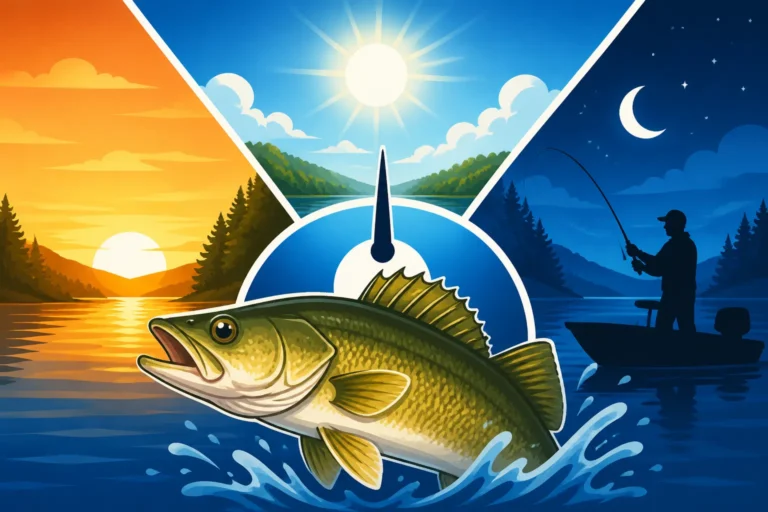
Muskie activity generally peaks during certain times of the day and year, though there are always exceptions. Early morning and late evening, often referred to as "low-light conditions," are prime feeding windows. During these times, the muskie's superior vision in dimmer light gives them an advantage over their prey. Overcast days, especially those with stable or rising barometric pressure, can also be fantastic for muskie fishing. Many experienced anglers swear by the idea that a dropping barometer often shuts muskie down, but a slowly rising or steady barometer tends to get them moving.
Seasonally, muskie fishing in West Virginia can be productive from spring through late fall. Spring sees muskie emerge from their winter haunts, often in shallower water, preparing for or recovering from spawning. They can be incredibly aggressive during this pre-spawn and early post-spawn period. Summer can be challenging as muskie often move deeper or become more nocturnal, but they are still catchable, especially in cooler, oxygen-rich areas. Then comes fall, arguably the most anticipated season. As water temperatures drop, muskie enter their "feeding frenzy" phase, bulking up for winter. This is when many of the biggest fish are caught.
While you might target Muskie in West Virginia throughout most of the year, understanding these seasonal patterns and daily behaviors is key to optimizing your efforts. For instance, knowing the best time of day to catch walleye in West Virginia might differ slightly from prime muskie times, highlighting the importance of species-specific knowledge. Pay close attention to weather fronts, as the days leading up to a cold front can sometimes trigger intense feeding, while the days immediately following can be slow. Consistent effort and adapting your approach to these conditions are far more effective than just blindly casting.
Essential Gear for West Virginia Muskie Fishing
Chasing muskie isn't like bass fishing; it demands specialized gear that can stand up to the sheer power and size of these freshwater giants. Cutting corners on equipment can lead to broken rods, lost fish, and a lot of heartache.
Rods, Reels, and Line for Handling Big Fish
When it comes to muskie fishing, your rod is your primary tool for casting heavy lures and battling powerful fish. You'll want a heavy power, fast action casting rod, typically between 8 to 9.5 feet in length. Longer rods aid in casting those big, wind-resistant lures further and provide better leverage when fighting a fish or performing the all-important figure-eight boat-side maneuver. Brands like St. Croix, G. Loomis, and Shimano offer excellent muskie-specific rods that can absorb the shock of a strike and provide the backbone needed to turn a big fish. Look for a rod with a comfortable grip that allows for hours of repetitive casting.
Pair that rod with a robust baitcasting reel designed for muskie. These reels need heavy-duty gears, a smooth and powerful drag system, and a high line capacity. A low-profile baitcaster might work for smaller muskie baits, but for the truly large stuff, many anglers opt for a round baitcasting reel, which offers more brute strength. A common gear ratio for muskie reels is around 5.1:1 to 6.4:1, providing a good balance of power for retrieving big baits and enough speed for quick hooksets. Shimano Tranx, Daiwa Lexa, and Abu Garcia Revo Toro Beast are popular choices that can handle the abuse muskie fishing dishes out. You can find many of these top-tier options on Amazon, often with competitive pricing.
Your line is the direct connection to the fish, so don't skimp here. Braided line is the standard for muskie fishing due to its incredible strength, lack of stretch, and thin diameter. Most muskie anglers use 80-100 lb test braided line. The no-stretch property allows for solid hooksets even at long distances and provides excellent sensitivity to detect subtle takes. Always check your line for frays or nicks after every outing, especially if fishing around rocky structure. Given the toothy nature of muskie, a heavy-duty fluorocarbon or steel leader is absolutely essential, which we'll discuss next. Using a lesser line weight is a recipe for disaster; these fish will exploit any weakness.
Lures That Trigger Muskie Strikes in WV
The world of muskie lures is vast and sometimes overwhelming, but there are several categories that consistently produce in West Virginia waters. Bucktails are arguably the most iconic and effective muskie lures. They create a huge visual profile and vibration in the water, mimicking fleeing baitfish. Double-bladed bucktails, often in sizes 8, 9, or 10, are incredibly popular, particularly in brighter colors like chartreuse, orange, or black with silver blades. Retrieving them with a "rip-and-pause" technique or a steady burn can often trigger savage strikes.
Hard baits, such as large crankbaits and jerkbaits, are also staples. Deep-diving crankbaits are excellent for trolling or casting over submerged humps and along drop-offs, reaching fish that are holding deeper in the water column. Jerkbaits, both glide baits and dive-and-rise models, allow for erratic, darting presentations that can imitate an injured baitfish, often irresistible to a curious muskie. Brands like Rapala, Livingston Lures, and Musky Innovations offer a wide array of options. Remember that the best lures for Muskie Fishing in West Virginia will vary by season and water clarity, so having a diverse selection is beneficial.
Soft plastics and rubber baits have also gained significant popularity, especially for their versatility and realistic profiles. Large paddle-tail swimbaits, often weighing several ounces, can be fished with a jig head and retrieved slowly or quickly, producing a tempting thumping action. "Rubber" lures, like those from Musky Mayhem or Chaos Tackle, are heavy, durable, and offer a unique action that can entice strikes when other lures fail. Topwater lures, such as prop baits and walk-the-dog style baits, are thrilling during low-light conditions or over shallow weed beds, creating explosive surface strikes that will get your heart pounding. Keep an eye on local conditions; sometimes, a more subtle approach with a large swimbait can outperform a flashy bucktail.
Terminal Tackle and Landing Gear You Can't Forget
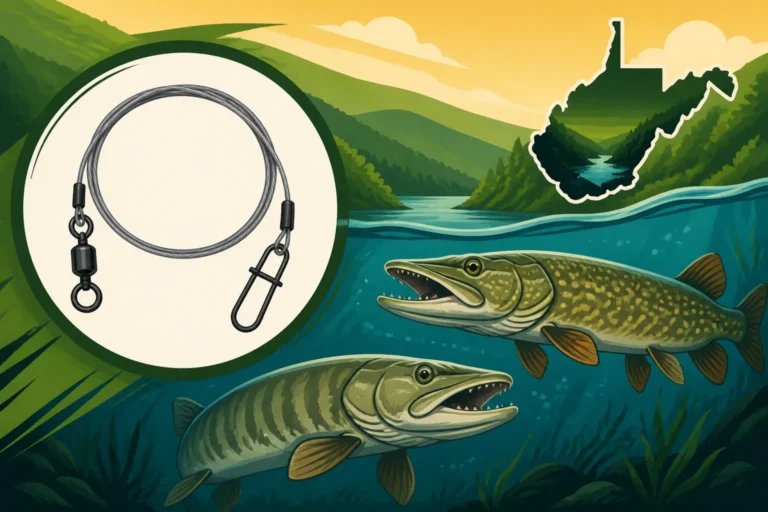
Beyond the rod, reel, and lure, your terminal tackle and landing gear are absolutely critical for safety and success. First and foremost, you need a heavy-duty leader. Muskie have incredibly sharp teeth that can easily cut through braided or monofilament line. A minimum of 100-150 lb test fluorocarbon leader or a steel leader is essential. These leaders should be at least 12-18 inches long to prevent the line from chafing against their gill plates during the fight. Secure these leaders to your main line with a strong knot like a FG knot or an Albright knot, and use heavy-duty snap swivels (rated for at least 150 lbs) for quick lure changes.
Landing a muskie safely for both the fish and the angler requires specialized tools. A large, rubber-coated landing net with a deep bag is paramount. The rubber coating protects the fish's slime coat, which is vital for its health, and prevents hooks from getting tangled. The net should be large enough to fully encompass a 40-50 inch fish. Brands like Frabill and StowMaster offer excellent muskie-specific nets. Trying to land a muskie by hand without proper technique is dangerous and highly discouraged. Always have a good set of long-nosed pliers or jaw spreaders and heavy-duty bolt cutters (to cut hooks if deeply embedded) readily accessible.
Gloves, particularly heavy-duty fish handling gloves, are also a wise investment. They protect your hands from those sharp gill plates and teeth if you need to briefly handle the fish. Remember, muskie have razor-sharp teeth that can inflict serious wounds. Having all your landing and release tools ready before you even cast is non-negotiable. This pre-planning ensures that once you land that fish, you can process it quickly and efficiently, minimizing stress on the muskie and maximizing its chances of survival, which is crucial given that Is It Legal to Release a Muskie You Catch in West Virginia? Yes, and it's highly encouraged.
| Lure Type | Common Sizes/Weights | Ideal Conditions | Retrieval Style | Notes |
|---|---|---|---|---|
| Bucktails | #7 – #10 Blades, 1-4 oz | All-around, especially good in stained/murky water, aggressive fish | Fast, steady retrieve ("burn"), sometimes with pauses | Great for covering water, high vibration. |
| Crankbaits | 6-12 inches, 2-6 oz | Deeper water, trolling, targeting specific depths | Steady retrieve, stop-and-go, erratic pulls | Dive to different depths, good for suspended fish. |
| Jerkbaits | 6-12 inches, 2-5 oz | Clearer water, imitating injured baitfish, over structure | Rod sweeps and pauses, erratic twitching, long pauses | Can be subtle or aggressive, excels in cold water. |
| Swim Baits | 8-14 inches, 3-10 oz | Any depth, varying conditions, realistic presentation | Slow roll, steady retrieve, jigging motion | Highly versatile, often made of soft plastic/rubber. |
| Topwater Lures | 6-10 inches, 1-4 oz | Low-light conditions, shallow water, calm surfaces | Walk-the-dog, chugging, erratic splashing | Exciting visual strikes, often best in summer. |
| Glide Baits | 6-12 inches, 2-6 oz | Clearer water, targeting specific fish, subtle presentation | Gentle rod sweeps, long pauses, "walk the dog" underwater | Minimal splash, good for neutral or pressured fish. |
Top West Virginia Muskie Waters and Their Unique Challenges
West Virginia is blessed with several fantastic muskie fisheries, each offering its own unique flavor and challenges to the dedicated angler. Knowing these distinct characteristics can significantly improve your chances.
Targeting Muskie in Lakes and Reservoirs
West Virginia's lakes and reservoirs provide excellent opportunities for muskie, often holding some of the state's largest specimens. Summersville Lake is a beautiful, deep lake known for its clear water and incredible smallmouth bass fishing, but it also holds a healthy population of muskie. The challenges here include the clear water, which can make muskie more wary, and the sheer size of the lake, requiring anglers to cover a lot of water. Focus on deep points, submerged timber, and significant depth changes. Trolling large crankbaits and working large glide baits or swimbaits over these structures are often effective. Look for areas with baitfish concentrations, as muskie will rarely be far from their food source.
Stonewall Jackson Lake is another prime muskie destination, particularly famous for its standing timber and dense aquatic vegetation. This habitat provides ample ambush points for muskie, but it also presents a challenge for anglers: snagging. Heavy cover requires heavy gear and strategic lure choices. Jerkbaits that can be worked through sparse cover, large weedless soft plastics, and heavy bucktails are often the go-to. Patience is key when working these areas, as a muskie might be buried deep within the cover, waiting for the perfect presentation. Understanding the Muskie Growth Rate to Trophy Size here can keep you motivated, knowing the potential giants that lurk within.
Burnsville Lake and Tygart Lake also offer great muskie fishing. Burnsville, like Stonewall, has plenty of standing timber and creek channels that muskie frequent. Tygart Lake, being a bit larger, offers excellent trolling opportunities, especially along main lake points and humps. For all these lakes, employing a good fish finder is invaluable. It helps you locate submerged structure, identify baitfish schools, and even spot individual muskie holding near cover. The challenges often involve vast expanses of water and the need for precision casting to specific pieces of structure. Knowing the terrain and the current oxygen and temperature levels at different depths will make a huge difference in your approach.
River Muskie Tactics in the New, Kanawha, and Little Kanawha
River fishing for muskie is a totally different ballgame, demanding a different set of skills and an intimate understanding of current. The New River Gorge, with its breathtaking scenery and wild reputation, is arguably West Virginia's premier river muskie destination. Here, muskie are strong, aggressive, and often less pressured than their lake counterparts. They relate heavily to current breaks, eddies behind large boulders, log jams, and any structure that offers a reprieve from the fast flow while providing an ambush point. Kayak fishing techniques for West Virginia Rivers, or fishing from a drift boat, are often the most effective ways to access these prime river spots.
The Kanawha River, a larger, slower-moving river, also holds impressive muskie. The challenges here include its size and often murkier water, which can make visual fishing difficult. Instead, anglers rely on lures that produce strong vibrations and profiles, like large bucktails, deep-diving crankbaits, and big swimbaits. Focus on tributary mouths, current seams, and deep scour holes near bridge pilings or wing dams. The muskie here are also exceptionally strong, fueled by the abundant baitfish in the system.
The Little Kanawha River is another gem, known for its healthy muskie population, particularly in its middle and upper sections. This river often has more manageable flows than the New, making it accessible for wade fishing in some areas, though a kayak or small jet boat still offers significant advantages. Look for stretches with good rock gardens, undercut banks, and laydowns. In all these rivers, safety is paramount. The current can be powerful, and navigating rocky terrain requires caution. Always wear a life jacket, especially when wading or in smaller craft. The rewards, however, are incredible: wild, hard-fighting muskie in some of West Virginia's most beautiful natural settings.
Navigating Different Water Conditions for Success
West Virginia's weather is notoriously unpredictable, and water conditions can change rapidly. Muskie anglers must be adaptable. After a heavy rain, rivers might become high and muddy. In these conditions, muskie often move out of the main current into slack water pockets and eddies. They'll also respond to lures that create a lot of vibration and are brightly colored or have dark silhouettes for contrast. Big bucktails, large thumping swimbaits, and even noisy topwater lures can be effective. The key is to fish slower and closer to cover, as the fish's strike zone might be reduced.
Conversely, during periods of low, clear water, particularly in summer, muskie can become extremely wary. Stealth is crucial. Long casts are often necessary, and lure choices might shift towards more natural colors or subtle presentations like glide baits or large jerkbaits worked with extended pauses. Fishing at dawn, dusk, or even Night Fishing for Muskie in West Virginia can also be highly productive when the water is clear, as the reduced light makes them feel more secure. These clear conditions often mean muskie will follow lures for a long time, so the figure-eight becomes even more critical to trigger a strike right at the boat.
Water temperature is another critical factor. During the cooler months of spring and fall, muskie might be found shallower, actively feeding. In the heat of summer, they often retreat to deeper, cooler, more oxygenated water or hold tight to thick cover. Knowing the preferred water temperature for Muskie fishing is paramount for determining their likely depth and activity level. Always pay attention to environmental cues, from water color and level to temperature and even recent weather patterns, and adjust your tactics accordingly. Muskie are highly sensitive to their environment, and the most successful anglers are those who can read the water and adapt.
Mastering Muskie Fishing Techniques for West Virginia
Catching muskie isn't just about having the right gear; it's about mastering the techniques that entice these apex predators to strike. From casting to boat-side maneuvers, every detail counts.
Casting and Retrieving Large Baits Effectively
Casting huge muskie lures day in and day out is a physical endeavor. It requires good technique to avoid fatigue and injury. Proper casting form involves using your entire body, not just your arm, to generate power. A smooth, controlled cast with a long rod will launch those heavy baits further and with more accuracy. Accuracy is vital; you need to place your lure precisely near structure where a muskie might be hiding. Many anglers practice casting in their yards to build muscle memory and improve their aim, as every inch can count when trying to get a lure into a tight seam or alongside a log jam.
Once your lure hits the water, the retrieve begins, and this is where strategy truly comes into play. Most muskie lures are designed to be retrieved with some variation of speed and pause. For bucktails, a "burn and kill" retrieve is popular: reeling as fast as you can for a few seconds, then pausing briefly, letting the lure fall, before burning it again. This erratic action mimics a fleeing baitfish, often triggering a chase and strike. For crankbaits, a steady retrieve might be best for covering water, while jerking and pausing them can draw strikes from more hesitant fish. The key is never to retrieve in a monotonous way; always introduce some element of surprise or change of pace.
Experimentation is critical. No two days are the same, and what worked yesterday might not work today. Vary your retrieve speed, the length of your pauses, and the depth you're working your lure. Pay attention to how the lure feels in the water – is it vibrating correctly? Is it running true? Sometimes, a slight tweak to a lure's tuning can make all the difference. The goal is to make your lure look as lifelike or as enticingly erratic as possible to a lurking muskie. Don't be afraid to try something different, even if it feels unconventional. Sometimes, the most unexpected retrieve is what triggers that heart-stopping strike.
Trolling Strategies for Deeper Waters
While casting is the more traditional and active way to pursue muskie, trolling can be incredibly effective, especially in West Virginia's larger lakes and reservoirs like Summersville or Tygart. Trolling allows you to cover vast amounts of water efficiently, presenting lures at precise depths and speeds for extended periods. This is particularly useful when muskie are scattered, holding deeper, or when you're trying to locate concentrations of fish over large structural features like main lake points, humps, or deep breaks.
When trolling for muskie, larger, deep-diving crankbaits are often the lures of choice. These baits are designed to reach depths of 15-30 feet or more, putting them in the strike zone of deeper-holding muskie. Experiment with different colors and sizes until you find what the fish are responding to. Heavy-duty rods, often 7-8 feet in length with a moderate action, are preferred for trolling, as they can handle the constant strain of pulling large lures and absorb the shock of a muskie strike. You'll also need specialized trolling equipment like planar boards to spread your lines out and cover a wider swath of water, or downriggers to precisely control your lure depth.
Speed and boat control are paramount. Muskie often have a preferred trolling speed, which can vary from 2.5 to 4.5 mph, depending on water temperature, lure type, and fish mood. Using your boat's GPS and speedometer to maintain a consistent speed is essential. Also, pay close attention to your sonar/fish finder to identify structure, baitfish, and any suspended muskie. Make subtle turns with the boat; these changes in direction can cause your lures to speed up or slow down, often triggering a follow or a strike. Trolling is a more passive technique than casting, but it still requires a keen understanding of the water and the fish's behavior to be consistently successful.
The Critical Figure-Eight and Boatside Maneuvers
This is perhaps the single most important technique in muskie fishing, especially in West Virginia where follows are common. Many muskie will follow a lure right to the boat, inspecting it but not committing to a strike. This is where the figure-eight comes in. Instead of simply lifting your lure out of the water, you immediately plunge your rod tip into the water (about 1-2 feet deep) and begin making large, continuous figure-eight patterns next to the boat. The idea is to keep the lure in the water and moving, often in a more erratic and seemingly panicked fashion, which can trigger a reaction strike from a curious follower.
The "figure-eight" needs to be executed quickly and smoothly. Keep your rod tip submerged and trace large circles with your lure, alternating between the bow and stern of the boat. Watch the muskie closely; if it continues to follow, adjust your pattern or speed. Sometimes a tighter, faster figure-eight will trigger a strike, other times a slower, wider sweep is needed. The transition from the retrieve to the figure-eight should be seamless, as a muskie might be inches from your lure when it happens. This technique demands focus and readiness at all times, right up until the lure is out of the water.
Successful figure-eights don't just happen; they require practice and nerves of steel. You'll likely see many muskie turn away, but the ones that commit make all the effort worthwhile. It's an adrenaline rush like no other to watch a giant muskie dart in and inhale your lure right at your feet. Always be prepared for a strike during the figure-eight, as they can be incredibly violent. Have your net ready, and ensure your drag is set properly. Mastering this boat-side maneuver can dramatically increase your muskie catch rate and prevent countless "follows" from turning into "what ifs."
Seasonal Approaches to West Virginia Muskie Fishing
Muskie fishing in West Virginia is a year-round pursuit, but your tactics need to shift with the seasons. Each season presents unique opportunities and challenges that demand a tailored approach.
Spring Muskie: Pre-Spawn and Early Season Aggression
As West Virginia emerges from winter's chill, spring brings a renewed sense of aggression to muskie. This is the pre-spawn period, typically from late March through April, when water temperatures are climbing into the 40s and 50s. Muskie will often move into shallower areas, such as bays, creek arms, and flats, seeking warmer water and preparing to spawn. They are actively feeding to build up energy reserves, making them quite catchable. The Best Techniques for Early Spring Trout might focus on different areas, but the general principle of fish seeking warmer water holds true.
During this time, slower, larger lures are often effective. Glide baits, large jerkbaits, and big soft plastics that can be worked slowly and deliberately can entice a strike from a cold-water muskie. Pay close attention to temperature breaks, even a degree or two can make a difference, as muskie will gravitate to the warmest water available. After spawning, which usually occurs when water temperatures hit the mid-50s, muskie can be a bit sluggish for a week or two, but they quickly regain their appetite during the post-spawn period. They'll continue to feed aggressively, often around weed lines or new growth of aquatic vegetation.
The challenge in spring can be fluctuating weather. Cold fronts can quickly drop water temperatures and shut down the bite, while stable, warming weather can activate fish. Focus your efforts during periods of stable weather, especially during sunny afternoons when the shallows have had a chance to warm up. Don't be afraid to experiment with brighter colors in stained water or more natural hues in clearer conditions. This season is a fantastic opportunity to intercept active muskie before the summer heat sends them deep.
Summer Muskie: Deep Water and Night Fishing Tactics
Summer muskie fishing in West Virginia can be a game of patience and adaptability. As water temperatures climb into the 70s, muskie often move to deeper, cooler, and more oxygenated water. In lakes and reservoirs, this means targeting muskie on deep points, submerged humps, along thermoclines, or around main lake basins. Trolling becomes a highly effective strategy, allowing you to cover vast deep areas and present large crankbaits at specific depths where fish are holding. The Best Time to Fish Summersville Lake in summer often involves these deeper, cooler zones.
During the day, muskie might hold tight to dense cover like thick weed beds, fallen trees, or rocky ledges, only moving to feed during brief windows. Early mornings and late evenings are still prime times, but the heat of midday can be tough. This is where Night Fishing for Muskie in West Virginia really shines. As the sun sets, muskie often move shallower to feed under the cover of darkness. Topwater lures, large dark-colored bucktails, and noisy crankbaits can be incredibly effective when retrieved over shallow flats or along weed edges after dark. The lack of visual cues makes muskie rely more on their lateral line, making noisy or vibrating lures irresistible.
However, summer also brings the risk of warm water stress to muskie. If water temperatures are excessively high (e.g., above 75 degrees Fahrenheit), muskie can become stressed during a fight, making catch-and-release survival rates lower. Always practice responsible catch and release, especially in warm water. Minimize fight time, keep the fish in the water as much as possible, and revive it thoroughly before release. Consider taking photos quickly and handling the fish as little as possible.
Fall Muskie: The Prime Time for Trophy Hunters
For many West Virginia muskie anglers, fall is the season. As water temperatures begin to drop into the 60s and then 50s, muskie enter a "feeding frenzy" phase, aggressively bulking up for the long winter ahead. This is when the biggest fish are often caught, and they are typically more willing to chase and strike a variety of lures. The Best Techniques for Fall Muskie Fishing emphasize capitalizing on this heightened aggression.
Muskie will often be found in shallower water again, particularly in bays, main lake points, and river bends where baitfish are congregating. They are less wary than in summer's clear water and more focused on feeding. Large bucktails, big swimbaits, and heavy jerkbaits are all highly effective. Don't be afraid to throw truly enormous baits – sometimes, the bigger the better, as muskie are looking for a substantial meal. The fish are often fat and feisty, providing spectacular battles.
As fall progresses into late autumn and early winter, the muskie may move a bit deeper but will still be actively feeding until water temperatures drop significantly. Look for schools of baitfish, as muskie will be shadowing them closely. This is a time when persistence truly pays off. Long days on the water, enduring the colder weather, can be rewarded with the muskie of a lifetime. The fish are often at their heaviest, making the fight even more exhilarating.
Winter Muskie: Patience and Persistence
While challenging, winter muskie fishing in West Virginia is a dedicated pursuit for a few hardy souls. Once water temperatures drop below 40 degrees Fahrenheit, muskie become much less active, moving slowly and holding tight to deep cover. They are still catchable, but the bite windows are smaller, and patience is a virtue. This isn't a numbers game; it's about targeting individual, sluggish fish.
Techniques shift dramatically. Slow, methodical presentations are key. Large rubber baits, deep-diving crankbaits that can be slowly trolled, or big jerkbaits worked with extremely long pauses are often the most effective. Muskie will be conserving energy, so a lure that looks like an easy, slow-moving meal is more likely to draw a strike than a fast-moving, high-energy bait. Focus on deep humps, main lake points, and river pools, particularly those with good cover like rock piles or submerged timber.
Ice fishing for muskie is less common but not unheard of in certain frozen lakes, often requiring specialized tackle and even more patience. Generally, winter muskie fishing is about finding fish that are willing to take a bait presented right in front of their face. It's a testament to the dedication of muskie anglers, proving that even in the coldest months, the "fish of 10,000 casts" can still be caught with enough determination and a highly refined approach.
Catch, Care, and Conservation for West Virginia Muskie
Landing a muskie is an incredible accomplishment, but the job isn't done until the fish is safely released. Muskie conservation is paramount to ensure healthy populations for future generations of anglers.
Proper Handling and Release to Ensure Survival
Muskie are notoriously fragile out of water, and improper handling is a leading cause of post-release mortality. The goal is to minimize the time the fish spends out of its element. As soon as you land a muskie in your net, keep it in the water. Unhook the fish while it's still in the net and submerged if possible. Have all your tools – jaw spreaders, long-nosed pliers, and bolt cutters – readily accessible. If the fish is deeply hooked, don't hesitate to use bolt cutters to snip the hooks. Hooks will rust out quickly, and the fish's survival is far more important than saving a cheap hook.
If you must remove the fish from the water for a quick photo, do so gently and support its entire body horizontally. Never hold a muskie vertically by its head or jaw; this can cause severe damage to its internal organs and spine due to its heavy weight. Cradle the fish with two hands, one supporting the head/gill plate area and the other supporting the tail. Keep its head down and tail up, allowing water to pass over its gills. Get your photo quickly – within 10-15 seconds if possible – and immediately return the fish to the water.
Once back in the water, support the muskie upright in a natural swimming position. Gently move it back and forth to force water over its gills, or hold it in a mild current. Look for signs of recovery: the fish will start to breathe regularly, its fins will stiffen, and it will try to swim away. Don't release it until it's strong enough to swim off on its own. The Muskie catch and release survival tips are essential reading for any angler hoping to preserve this incredible fishery. Every single fish released correctly contributes to the overall health and sustainability of West Virginia's muskie population.
Safety Considerations When Landing a Large Muskie
Landing a large muskie isn't just about fish safety; it's also about angler safety. These are powerful, thrashing predators with sharp teeth and gill plates. They can inflict serious injury if you're not careful. Always wear appropriate eye protection, such as polarized sunglasses, to shield your eyes from flailing lures and splashing water. When a muskie comes boatside, it often makes a final, violent surge, so be prepared for unexpected movements.
Ensure your boat is clear of clutter that could trip you up, and have all your tools organized and within easy reach. Never try to net a muskie until it's tired; attempting to net an energetic fish will often result in a missed opportunity and potentially a tangled mess. Once the fish is in the net, keep your hands clear of its mouth and gill plates. If you need to handle the fish to remove hooks, use heavy-duty gloves and the appropriate tools like jaw spreaders to safely access the hooks.
If you're fishing with a partner, communicate clearly during the landing process. Designate roles: one person on the rod, the other on the net and tools. A calm, coordinated effort is much safer and more effective than a chaotic one. Remember, the fish of 10,000 casts can also be the fish of a thousand cuts if you're not careful. Prioritize safety for both yourself and the muskie, ensuring that a memorable catch doesn't turn into a regrettable incident.
Understanding West Virginia Muskie Regulations
Compliance with West Virginia fishing regulations is not just a legal requirement, it's a critical component of conservation. Regulations, such as those detailed in the West Virginia Fishing Regulations Explained document, are designed to protect and enhance muskie populations, which are slower growing and reproduce less frequently than many other sport fish. Before heading out, always consult the most current West Virginia Fishing Regulations Summary to familiarize yourself with specific muskie rules.
Key regulations to pay attention to include length limits, daily creel limits, and season dates. West Virginia has specific Muskie Regulations in West Virginia Waters, which often include a minimum length limit (e.g., 30 or 36 inches, though this can vary by water body) and a very conservative daily creel limit, often one or two fish. These regulations are in place to allow muskie to reach reproductive maturity and contribute to future generations before being harvested. Catch and release is strongly encouraged for all muskie, especially those over the minimum legal size, as these larger fish are often the most valuable spawners.
Additionally, be aware of any special regulations for specific bodies of water. Some lakes or river sections might have unique rules regarding muskie, or even gear restrictions. Ignorance of the law is not an excuse, and penalties for Fishing Without a License in West Virginia or violating species-specific regulations can be steep, including fines and revocation of fishing privileges. By adhering to these regulations, you're playing an active role in maintaining the health and vitality of West Virginia's incredible muskie fishery.
Troubleshooting Common Muskie Fishing Frustrations
Even the most seasoned muskie anglers face frustrations. It's part of the game. Understanding why things go wrong and how to adapt can turn a challenging day into a successful one.
Why Muskie Follow But Don't Commit
The dreaded "muskie follow" is a common, often heartbreaking, experience. You've made hundreds of casts, finally see that torpedo-shaped shadow behind your lure, only for it to turn away at the boat. Why do they do it? Often, it's a matter of curiosity, inspection, or a hesitation to strike. The muskie is interested, but something isn't quite right.
One reason is a lure presentation that lacks that final trigger. The muskie might have followed the lure for 50 feet, but the straight retrieve didn't give it enough reason to commit. This is precisely why the figure-eight at the boat is so crucial. That sudden, erratic movement can often trigger an instinctual, aggressive strike that the earlier retrieve didn't provoke. Another factor could be water clarity. In clear water, muskie have more time to inspect a lure and might detect something unnatural, such as a visible knot or the wrong leader material.
To combat follows, vary your retrieve frequently. Introduce sudden jerks, pauses, or changes in speed throughout your cast, not just at the boat. Experiment with different lure colors and sizes; sometimes a slightly smaller bait, or one with a more subtle action, can elicit a strike from a wary follower. Consider your approach: are you casting a long shadow over the water? Is your boat making too much noise? Subtle factors can make a big difference. Remember, a follow is still a positive sign – it means a muskie is interested. The challenge is converting that interest into a strike.
Adapting to Changing Weather and Water Conditions
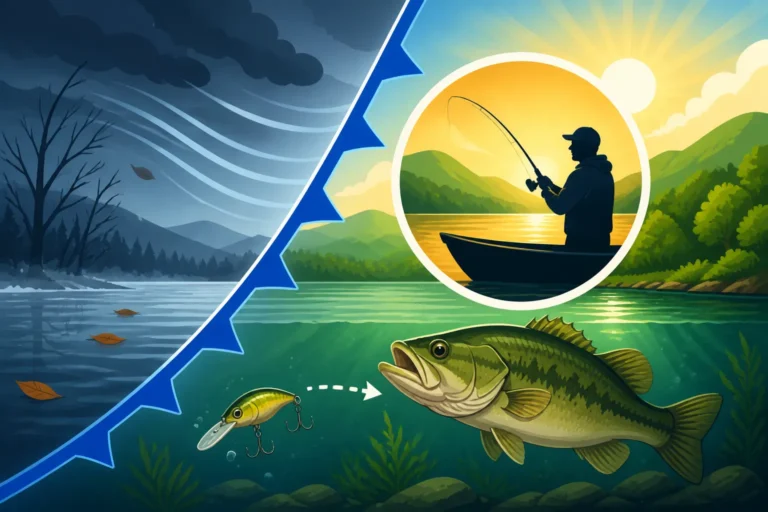
West Virginia weather is famously dynamic, and conditions can change rapidly. One moment it's sunny and calm, the next a storm rolls in, or water levels fluctuate dramatically. A failure to adapt to these changes is a common reason for a slow fishing day. For instance, if a cold front pushes through, dropping air and water temperatures, muskie often become lethargic and move deeper or bury themselves in heavy cover. Continuing to burn bucktails over shallow flats will likely be unproductive.
Instead, slow down. Switch to large, slowly retrieved jerkbaits or heavy soft plastics that can be worked deliberately along deep structure. If the water becomes muddy after heavy rains, switch to lures that create strong vibrations and have dark profiles or bright, contrasting colors to stand out. Muskie in these conditions will often move out of the main current into slack water, so target eddies and sheltered bays. Understanding how barometric pressure affects West Virginia bass fishing can also give clues for muskie, as these predators are often impacted by similar atmospheric changes.
The most successful muskie anglers are constantly observing and adapting. Pay attention to everything: water temperature, clarity, flow, wind direction, and sunlight. If one technique isn't working, don't be afraid to change lures, retrieve styles, or even move to an entirely different part of the lake or river. The fish are always somewhere, doing something; your job is to figure out what that is and adjust your approach accordingly. Persistence with a flexible strategy is key.
Persistence and Mindset in the Face of the "Fish of 10,000 Casts"
Let's be honest, muskie fishing is as much a mental game as it is a physical one. The "fish of 10,000 casts" nickname isn't hyperbole; you will have days, or even weeks, where you cast tirelessly without a single strike or even a follow. This can be incredibly frustrating and demoralizing, leading many anglers to give up. The true secret to muskie fishing, more than any specific lure or technique, is persistence and a positive mindset.
You have to believe that the next cast could be the cast. Every follow, every flash, every missed strike is a lesson learned and a step closer to landing that fish. Don't let long dry spells break your spirit. Instead, use them as motivation to refine your technique, explore new water, or try a different approach. The reward of finally hooking and landing a muskie, especially a big one, is so immense precisely because of the effort and dedication it demands.
Embrace the challenge. Celebrate the follows. And most importantly, enjoy the process of being out on West Virginia's beautiful waters. The camaraderie with fellow muskie anglers, the stunning sunrises and sunsets, and the thrill of the hunt are all part of the experience. The muskie is a majestic creature, and even a brief encounter with one, whether it's a follow or a strike, is a memorable moment. Stay focused, stay positive, and keep casting – that trophy muskie is out there, waiting for you.
Disclaimer
The information provided in this guide is for general informational purposes only and is not intended to be legal advice or a substitute for professional guidance. Fishing regulations in West Virginia can change, and it is the sole responsibility of the angler to consult the latest official West Virginia Division of Natural Resources (WVDNR) regulations before engaging in any fishing activities. Always prioritize safety and environmental responsibility.