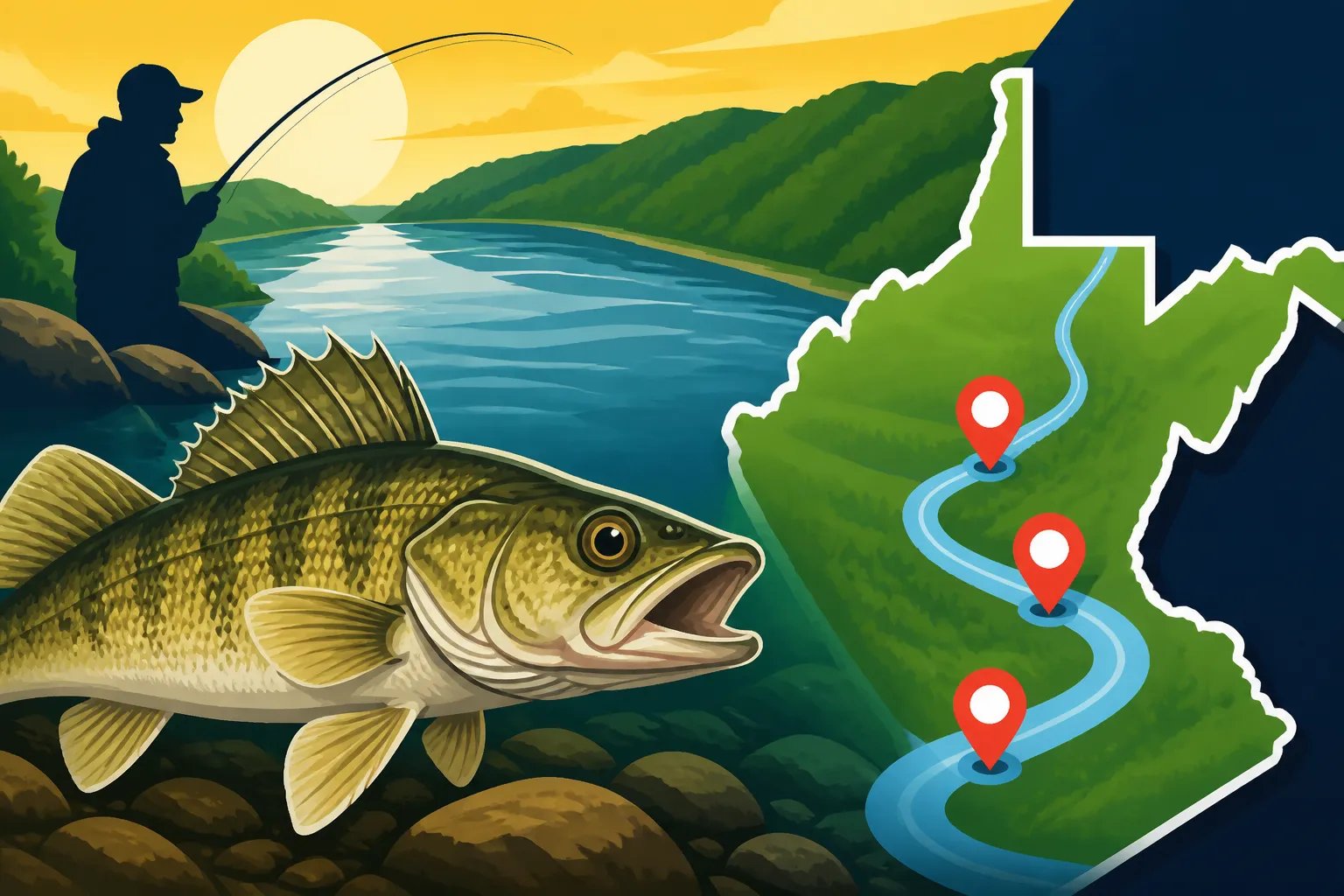
Sauger fishing spots on the Ohio River
For many anglers, the vast expanse of the Ohio River can feel intimidating, especially when you're targeting a specific, somewhat elusive species like the sauger. It's easy to get lost in the sheer size of the waterway, wondering where to even begin looking for these finicky fish. This guide aims to cut through the confusion, revealing the prime sauger fishing spots along West Virginia's stretch of the Ohio River and explaining the crucial factors that make these locations productive.
Understanding Sauger Habits on the Ohio River
Before we dive into specific locations, it's absolutely vital to understand what makes a sauger tick. These aren't your typical ambush predators that lurk in shallow cover all day. They have distinct preferences that, once understood, can dramatically increase your success rate on the Ohio River. Ignoring these habits is often why anglers struggle to find them consistently.
Sauger Preferred Habitat and Structure
Sauger are true bottom-dwellers, and they absolutely love current. Unlike their walleye cousins who might venture into shallower, warmer waters, sauger prefer cooler, deeper sections of the river, especially those with some sort of current break or structure. Think about areas where the main river channel meets a feeder creek, where submerged rock piles create eddies, or where navigation buoys cause slight current disruptions. These current breaks allow them to conserve energy while waiting for food to drift by. They also gravitate towards sharp drops, underwater humps, and the seams between fast and slow water. Often, they'll be found directly in the main channel, hugging the bottom where the current is strongest, but they'll position themselves just out of the direct flow.
Seasonal Movements and Spawning
Sauger fishing on the Ohio River is a year-round affair, but their concentrations and locations shift with the seasons. In late fall and throughout winter, they really stack up in deeper pools below dams or at the mouths of larger tributaries. This is a prime time for vertical jigging, as they tend to be tightly schooled. As spring approaches, they begin to migrate upstream to spawn, often in shallow, rocky areas of tributaries or main river shoals when water temperatures hit the mid-40s to low 50s Fahrenheit. After spawning, they'll disperse but generally remain in deeper sections of the main river. Summer can be tougher, as they spread out more and seek the coolest, deepest water available, often congregating around thermal refuges or deeper structure. Knowing these West Virginia Fishing Seasons by Month can help you anticipate their movements.
Forage and Feeding Patterns
Sauger are opportunistic predators, but they primarily feed on smaller baitfish. Shad, emerald shiners, and small minnows are their bread and butter on the Ohio River. They're built for bottom-feeding, with eyes that point slightly upward, making them perfectly adapted to spot silhouettes of prey against the lighter water surface above. They often feed actively during low-light conditions, like dawn, dusk, or even through the night, but can be caught throughout the day, especially in deeper, stained water or during overcast weather. If you can locate schools of baitfish, you’re usually one step closer to finding sauger.
Key Hotspots and Access Points Along the West Virginia Ohio River Shoreline
The Ohio River along West Virginia is dotted with fantastic sauger fishing opportunities, but some areas consistently produce better than others. It's often about finding the right combination of current, depth, and structure.
Navigating Lock and Dam Systems
Without a doubt, the areas immediately below the many lock and dam systems on the Ohio River are sauger magnets. The dams create turbulent, highly oxygenated water and concentrated current, which sauger absolutely love. The bottom structure in these areas often consists of rip-rap, scour holes, and various debris, providing excellent ambush points. Places like the Willow Island Lock and Dam near St. Marys, the Belleville Lock and Dam near Parkersburg, and the Robert C. Byrd Lock and Dam near Gallipolis are legendary for their sauger runs. Anglers often fish the turbulent tailwaters right out of the gates, or the calmer eddy lines further downstream. Just be extremely aware of navigation and safety zones, as these areas can be dangerous due to strong currents and barge traffic. Always consult the official regulations and navigation charts.
Specific Productive River Sections
Beyond the dams, specific stretches of the Ohio River offer consistent sauger action.
- Wheeling Area: The stretch of river around Wheeling offers a mix of urban structure and deeper channels. Bridge pilings, industrial outfalls, and the deeper holes provide excellent holding areas for sauger. Shore anglers can find success around various public access points, while boaters can explore the main channel breaks.
- Parkersburg Area: Near Parkersburg, particularly downstream of the Belleville Lock and Dam, the river widens, but still offers defined channels and excellent tributary mouths like the Little Kanawha River. The confluence of these rivers provides nutrient-rich water and current breaks that sauger utilize. Look for submerged wing dams or rock piles that aren't immediately obvious from the surface.
- Point Pleasant and the Kanawha River Confluence: Where the mighty Kanawha River empties into the Ohio at Point Pleasant, you'll find a dynamic confluence zone. This area is a rich feeding ground for many species, including sauger. The deeper channels and current seams created by the joining of these two large rivers are prime spots. Anglers often target the areas just upstream and downstream of the confluence. This region is also known for its productive Ohio River walleye aggregate limit for West Virginia anglers fishing, and sauger are often caught right alongside them.
When planning a trip, services like FishingBooker can sometimes help you find local guides who specialize in these specific Ohio River sections, offering invaluable firsthand knowledge of current hot spots and conditions.
Public Access and Boat Launch Considerations
Access is key on the Ohio River. While many areas offer fantastic bank fishing opportunities, having a boat often gives you the flexibility to reach prime, less-pressured spots. West Virginia has numerous public boat launches along the Ohio River, managed by local municipalities or the WV DNR. Before heading out, always check the river conditions, especially water levels and current speed, as these can drastically affect launch and retrieval safety. Also, be mindful of West Virginia Boating Laws for Anglers and Life Jacket Requirements for West Virginia Boaters to ensure a safe and legal trip. A good sturdy jon boat or a versatile fishing kayak can be excellent choices for navigating these waters, but larger boats are also common for covering more ground. If you're looking for more details on different vessel types, you might find "Best Boats for West Virginia Rivers and Lakes" to be a helpful read.
| Ohio River Sauger Hotspots (West Virginia) | Primary Structure | Best Access Type | Key Considerations |
|---|---|---|---|
| Willow Island Lock and Dam Tailwaters | Dams, Scour Holes | Boat (safe distance) | Strong current, heavy boat traffic, regulatory zones |
| Belleville Lock and Dam Tailwaters | Dams, Rip-rap | Boat, Bank (limited) | Excellent winter fishing, watch for debris |
| Robert C. Byrd Lock and Dam Tailwaters | Dams, Eddies | Boat | Very productive, often crowded, strong currents |
| Wheeling Riverfront/Bridge Pilings | Bridge pilings, Docks | Bank, Boat | Urban fishing, can be good after dark, deeper holes |
| Parkersburg – Little Kanawha Confluence | River confluence, Depths | Boat, Bank | Baitfish concentrations, current seams, varying depths |
| Point Pleasant – Kanawha River Confluence | River confluence, Drops | Boat, Bank | Deep holes, strong currents, good for winter/spring |
Techniques and Best Times for Ohio River Sauger
Sauger might be challenging, but they are certainly catchable with the right approach. Your technique needs to adapt to the river's conditions and the sauger's current mood.
Jigging and Vertical Presentation
This is, hands down, the most popular and often most effective method for sauger on the Ohio River, especially when they are schooled up in deeper water or below dams.
- Vertical Jigging: Use jigs weighing between 1/4 to 1 ounce, depending on current and depth. Tipping your jig with a live minnow, a piece of nightcrawler, or a scented soft plastic (like a Berkley Gulp! Minnow) can significantly increase strikes. The key is to keep the jig vertical and just off the bottom, barely lifting and dropping it. You're trying to imitate a stunned or dying baitfish. Many anglers use their electronics to spot schools and then drop their jigs directly into them.
- Blade Baits: These vibrating metal lures are deadly for sauger, especially in colder water. Their tight wobble and flash attract sauger from a distance. Again, a vertical presentation is best, letting it hit bottom, then lifting it with a sharp snap and letting it fall back on a semi-slack line. The bite often comes on the fall.
- Dragging Jigs: In less turbulent water, sometimes a slower drag can be effective. Use a lighter jig (1/8 to 1/4 ounce) and let your boat drift slowly with the current, keeping the jig in contact with the bottom. This is particularly effective when sauger are a bit more spread out.
Trolling and Drifting Strategies
When sauger are more dispersed or actively cruising for food, trolling or drifting can cover more water and help you locate them.
- Three-Way Rig: This classic setup is incredibly effective. Use a three-way swivel, with one eye tied to your main line, another to a short leader (1-2 feet) with a heavy sinker (1-4 ounces depending on current), and the third to a longer leader (3-6 feet) with a shallow-diving crankbait or a stickbait. The sinker keeps your lure near the bottom, while the crankbait wobbles enticingly in the current. This rig allows you to fish multiple depths and cover varied terrain efficiently.
- Bottom Bouncers: Similar to a three-way rig, but specifically designed to keep your bait near the bottom while minimizing snags. Attach a crawler harness, a live minnow rig, or a small jig to the trailing arm of the bottom bouncer. Slowly troll or drift these along channel edges or over humps.
- Crankbait Trolling: Sometimes, simply trolling deeper-diving crankbaits (like those from Rapala, Berkley, or Bandit) that can get down to 15-25 feet is all it takes. Experiment with different colors and sizes until you find what the fish are keying in on. The best colors often mimic local baitfish, like shad or shiners. For additional insights on optimal times, check out "Best Time of Day to Catch Walleye in West Virginia," as sauger often follow similar patterns.
Prime Seasons and Conditions
The absolute prime time for sauger on the Ohio River is typically late fall through early spring. As waters cool, they school up and become much more predictable. December through March often sees the best catches, especially around the lock and dam tailwaters. Overcast days, light rain, or even snowfall can often turn on the bite, as these conditions reduce light penetration, making sauger feel more comfortable feeding in slightly shallower depths. They are also notoriously sensitive to light, so low-light conditions are always a plus. Pay attention to water clarity; moderately stained water is often ideal, as it provides cover for the sauger but still allows them to see their prey.
Essential Gear and Safety for Ohio River Sauger Fishing
Fishing the Ohio River for sauger requires not just the right techniques, but also the proper gear and, crucially, a strong emphasis on safety. This powerful river demands respect.
Rod, Reel, Line, and Lure Choices
For sauger fishing, you'll want a sensitive yet powerful setup.
- Rods: A medium-light to medium power spinning or casting rod, typically 6'6" to 7'6" in length, is ideal. The sensitive tip is crucial for detecting subtle sauger bites, while enough backbone helps you manage the fish in current. A fast action tip will give you the sensitivity you need.
- Reels: Pair your rod with a reliable spinning reel in the 2500-3000 size range or a low-profile baitcasting reel. Smooth drag is a must for fighting fish in current.
- Line: Braided line (10-20 lb test) is highly recommended for its sensitivity and lack of stretch, which helps detect those light bites in deep water or strong current. Always use a fluorocarbon leader (6-12 lb test, 3-6 feet long) to your lure or rig. Fluorocarbon is nearly invisible underwater and abrasion-resistant, which is vital around rocks and mussels.
- Lures: As mentioned, jigs (1/4 to 1 oz), blade baits, three-way rigs with crankbaits (e.g., Strike King, Rapala Shad Raps), and bottom bouncers with crawler harnesses are your go-to options. For jig colors, anything mimicking baitfish (silver, white, chartreuse, natural browns/greens) or with a bit of glow is usually effective. For more specific lure recommendations, researching "Best Jigs for West Virginia Walleye" can offer crossover insights, as walleye and sauger often respond to similar presentations.
Cold Weather Preparedness and Boating Safety
Sauger fishing often means facing cold weather, especially during the peak fall and winter seasons. Layering is non-negotiable. Thermal underwear, fleece, waterproof outer layers, warm gloves, and a hat are essential to stay comfortable and safe. Hypothermia is a real risk.
For boaters, safety on the Ohio River is paramount. This is a working river with commercial barge traffic, strong currents, and often unpredictable conditions.
- Life Jackets: Ensure everyone on board has a properly fitted life jacket and wears it, especially when operating in rough water or near dams. This is not just good practice; it's the law in many situations.
- Navigation Lights and Signals: Always have functioning navigation lights, especially during low light or foggy conditions. Familiarize yourself with river navigation rules and signals used by barges.
- Communication: Carry a marine band radio or a fully charged cell phone in a waterproof case.
- Emergency Gear: Flares, a first-aid kit, anchor, and paddle are non-negotiables.
- Check Conditions: Always check weather forecasts, river levels, and current reports before heading out. High water levels or strong currents can make fishing dangerous and unproductive.
- Respect the River: Give commercial traffic a wide berth, be aware of no-wake zones, and understand the specific regulations for fishing near dams. The Ohio River can be an incredibly rewarding place to fish for sauger, but it demands your respect and preparedness. Considering these safety aspects is just as important as knowing where to drop your line.
Finally, remember that conservation is key. While sauger are abundant, understanding and adhering to West Virginia Fishing Regulations Explained and proper catch and release practices, especially for any fish you don't intend to keep, ensures that future generations can enjoy this fantastic fishery.
Disclaimer
Please remember that fishing conditions, regulations, and access points can change. Always consult the latest West Virginia Division of Natural Resources fishing regulations before heading out on your trip. This guide is for informational purposes only and does not replace official guidelines.