Digital vs paper fishing license in West Virginia
We've all experienced that moment of panic on the water, whether you're deep in the Monongahela National Forest or casting on the Ohio River, and you suddenly wonder: "Do I have my fishing license?" The confusion around whether a digital image on your phone is enough, or if you still need that crinkly paper copy, is a common frustration for many West Virginia anglers. This guide is here to clear up all the mystery surrounding digital versus paper fishing licenses in the Mountain State, ensuring you're always legal and stress-free on your next outing.
The Modern Convenience of a Digital Fishing License in West Virginia
The world has gone digital, and West Virginia has embraced this shift, making it easier than ever for anglers to manage their licenses. No more rummaging through tackle boxes or old wallets hoping to find that elusive piece of paper. With a few taps on your smartphone, you can often have your proof of licensure right at your fingertips. It’s a game-changer for many, but it also comes with its own set of considerations.
How to Access and Display Your Digital License
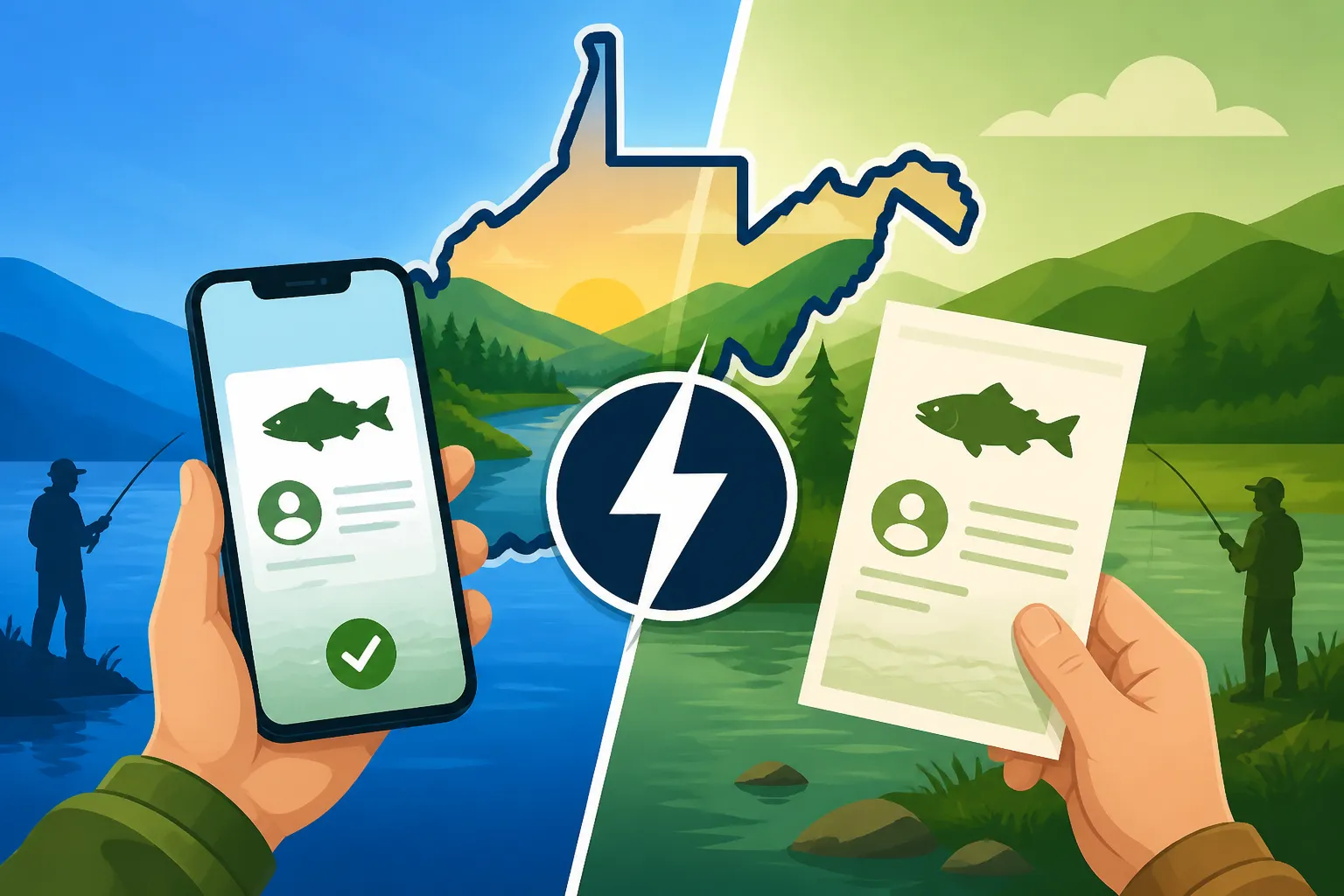
For West Virginia anglers, the primary way to access and display a digital fishing license is through the official WVhunt mobile app, provided by the West Virginia Division of Natural Resources (WV DNR). Once you've purchased your license online, which is usually the quickest and most convenient method, it automatically syncs with your profile on the app. This means you can download the app, log in with your credentials, and your current fishing license, along with any other permits like a West Virginia Trout Stamp, will be visible. It’s truly as simple as opening an application on your phone.
When a conservation officer asks to see your license, you simply pull up the WVhunt app, navigate to your license profile, and display the digital version. This process is generally accepted and makes compliance straightforward. However, it's always a good practice to ensure your phone screen is clean and bright enough for easy viewing, especially in sunny conditions. Remember, having the app downloaded and logged in before you head out to a remote area with spotty cell service is crucial. You don't want to be caught trying to download it when you need it most, or worse, find yourself without a signal at all. For more details on this process, you can check out how to buy a fishing license on WVhunt.com.
Benefits and Drawbacks of Going Digital
There's no denying the immediate convenience a digital license offers. You're far less likely to forget your phone than a specific piece of paper, and if you accidentally leave your license at home, as long as your phone is with you, you're good to go. This environmental benefit also means less paper waste, which is a small but meaningful contribution to conservation efforts. Plus, should you need to reference specific regulations or purchase additional licenses on the fly, having the app handy can be incredibly useful.
However, the digital convenience isn't without its potential pitfalls. The most glaring issue is battery life. Imagine finally getting to your favorite remote spot on the Cranberry River, only to realize your phone battery is dead, or you have no signal to pull up your digital license. Many of West Virginia's most beautiful fishing locations are truly off the grid, where cell service is non-existent. Another major concern is phone damage. A dropped phone on rocky terrain or an accidental dunk in the river can quickly render your digital license inaccessible, potentially leading to a fine for fishing without a license in West Virginia: Penalties. Investing in a good waterproof and shockproof phone case, or carrying a portable power bank, can mitigate some of these risks. You can find many reliable options for phone protection on Amazon, for instance.
The Traditional Paper Fishing License Experience
While digital options are gaining traction, the traditional paper fishing license still holds its own, favored by many for its reliability and simplicity. For years, this was the only way to prove you were legally permitted to cast a line, and for good reason—it's a tangible record that doesn't rely on technology.
Obtaining and Carrying Your Physical License
Obtaining a physical paper license is still widely available and quite simple. You can purchase one in person from hundreds of authorized license agents across West Virginia, including most sporting goods stores, bait shops, and even some county clerk's offices. When you purchase it this way, you'll immediately receive a printed copy. Alternatively, if you buy your license online through the WV DNR website, you have the option to print it at home. This allows you to secure your license from the comfort of your couch and have a physical copy in hand before you even hit the road.
Once you have your paper license, the key is to carry it on your person while fishing. This typically means tucking it into your wallet, a tackle box, a specific pocket in your fishing vest, or even a small, dedicated waterproof pouch. The important thing is that it's readily accessible and kept as safe as possible from the elements. Some anglers even take the extra step of laminating their paper license to protect it from water damage and wear and tear, extending its lifespan significantly. You can often find affordable laminating pouches and machines on Amazon, which can be a small investment for peace of mind.
Advantages and Disadvantages of the Paper Format
The primary advantage of a paper license is its sheer reliability. It doesn't need battery power, it won't crash, and it doesn't care if you have cell service. This makes it an ideal choice for those venturing into West Virginia's wilder, more remote streams and lakes, where technology might fail. It's a simple, straightforward proof of purchase that any conservation officer can quickly verify, provided it's legible and matches your identification. You can also easily refer to your West Virginia Fishing Regulations Explained summary which often comes with the printed license, making it handy for quick checks on limits or specific rules.
On the flip side, paper licenses are, well, paper. They are susceptible to being lost, torn, or ruined by water. A sudden downpour or an accidental splash can turn a crisp document into an unreadable mess. We've all been there: fumbling through your wallet only to realize your paper license is wrinkled, wet, or worse, completely missing, leaving you scrambling and worried about potential fines. Keeping track of a small piece of paper can also be a challenge, especially if you're prone to forgetting things or have multiple items to manage while getting ready for a trip. If you happen to lose your license, understanding the process for replacing a lost West Virginia fishing license will be important.
Key Considerations for West Virginia Anglers
When deciding between a digital or paper license, or perhaps even a combination of both, there are several practical considerations specific to West Virginia's unique angling environment that you should keep in mind.
Legal Requirements for Carrying Your License
West Virginia law is clear: any angler aged 15 or older (unless exempt, for example, through certain Free and Discounted Fishing License Options in West Virginia) must possess a valid fishing license while fishing. This applies to both residents and non-residents alike. Critically, you must be able to present this license upon demand to any law enforcement officer, including conservation officers. The WV DNR officially recognizes both valid printed licenses and licenses displayed on a mobile device through the WVhunt app as acceptable forms of proof. However, it's not enough to simply have the license; you must also be able to present valid identification, such as a driver's license, to confirm that the license belongs to you. This is essential, as identity verification is a crucial step in ensuring compliance.
Imagine a scenario where you're fishing a secluded section of the Elk River, and a conservation officer approaches. If you're using a digital license, they'll expect to see it clearly displayed on your phone. If your phone is dead, or you can't access the app, it's essentially the same as not having your license with you. The burden of proof is on the angler, not the officer. This also ties into specifics like your West Virginia's Conservation Stamp, Explained, which must also be verifiable. The regulations explicitly state that you are responsible for keeping your license accessible and in a condition that allows for clear verification.
Preparing for the Unexpected: Backups and Best Practices
Given the pros and cons of both options, the most pragmatic approach for many West Virginia anglers is to embrace redundancy. Why choose one when you can have the peace of mind of both? A common best practice is to carry a physical, laminated copy of your license (which you printed at home or received from a vendor) and also have it accessible on the WVhunt app on your smartphone. This way, if your phone takes an unexpected dive into Summersville Lake, or if you accidentally leave your paper copy at the bait shop, you still have a backup.
Another smart move for digital users is to take a screenshot of your active license within the WVhunt app. This screenshot is usually accessible even without cell service, providing a quick fallback if the app itself struggles to load in a low-signal area. For paper license holders, consider keeping a second physical copy in a waterproof bag in your vehicle, especially if you frequently fish areas far from home. Think about getting a small, robust dry bag or a secure waterproof wallet that can be attached to your belt or fishing vest. Brands like Sea to Summit or L.L.Bean offer excellent options for keeping your essentials dry and secure, ensuring your license stays safe even in the most rugged West Virginia conditions. This proactive preparation can save you a lot of hassle and potential legal trouble, letting you focus on the joy of fishing. Remember, regardless of your chosen method, understanding the West Virginia Fishing License Age Requirements and who needs a license is paramount.
Digital vs. Paper Fishing License Comparison
To help you decide which method (or combination) is best for you, here's a quick comparison of the key features of digital and paper fishing licenses in West Virginia:
| Feature | Digital License (WVhunt App) | Paper License (Printed) |
|---|---|---|
| Accessibility | On smartphone, immediate access | Physical copy, stored in wallet/tackle box |
| Reliance | Requires phone battery, potential for signal issues | No battery/signal needed, purely physical |
| Durability | Depends on phone protection, susceptible to water/drops | Susceptible to tearing, water damage, wear (unless laminated) |
| Convenience | Always with you if you have your phone | Tangible, easy to locate quickly |
| Environmental | Paperless, eco-friendly | Requires paper |
| Backup Option | Screenshot recommended, secondary device | Laminated copy, second print in car |
| Cost | No extra cost (beyond phone/data plan) | Potential for lamination cost, printing ink/paper |
| Verification | Requires clear screen display, matching ID | Requires legible document, matching ID |
The takeaway here is that while digital is convenient, paper offers steadfast reliability, and having both is often the best strategy for West Virginia's diverse fishing environments. You'll always be ready, whether you're reading the West Virginia Fishing Regulations Summary at home or out on the water.
Disclaimer
Please note that while this guide provides comprehensive information, fishing regulations and licensing requirements can change. Always consult the official West Virginia Division of Natural Resources (WV DNR) website or their current regulations summary for the most up-to-date and accurate information before heading out to fish.