Best boat lights for night catfishing
There’s nothing quite like the thrill of chasing catfish under the cover of darkness. The air is cooler, the world feels quieter, and those big whiskered beauties often become much more active. But let's be real, trying to navigate or even bait a hook in pitch black can quickly turn that peaceful night into a frustrating, even dangerous, ordeal. This guide is all about shedding some light on your nocturnal angling adventures, focusing on the best boat lights to keep you safe and help you land more catfish here in West Virginia's beautiful waters.
Why Night Lighting is Non-Negotiable for Catfishing Adventures
Night fishing for catfish is an experience unlike any other, offering a unique solitude and often the chance to hook into some truly impressive fish. However, the very darkness that makes it special also introduces a host of challenges that can quickly turn a dream trip into a nightmare if you're not properly equipped. Adequate boat lighting isn't just a convenience; it's a fundamental necessity for safety, compliance, and ultimately, your success on the water after the sun dips below the horizon.
Safety First: Navigating Dark Waters
Imagine drifting along the Kanawha River or navigating through a cove on Summersville Lake, and suddenly, a rogue log or an unlit boat appears out of nowhere. The thought alone is enough to send shivers down an experienced angler's spine. Navigating in the dark, especially on unfamiliar or debris-laden waters, presents significant risks. Without proper lighting, your ability to spot hazards, gauge distances, and react quickly is severely compromised. It’s not just about what you can see, but what others can see of you.
Every year, there are incidents on waterways that could have been avoided with better visibility. Submerged stumps, rocky shoals, and even other fishermen or recreational boaters become invisible threats. Your navigation lights, those red and green lights on your bow and the all-around white light on your stern, are your beacon in the dark. They tell other vessels your position, direction of travel, and whether you're anchored or underway. Without them, you're a ghost on the water, and that's a risk no one should take, especially when there are clear West Virginia boating regulations about proper lighting.
Enhancing Your Fishing Experience After Sundown
Beyond the critical safety aspect, good lighting dramatically improves the practical side of night catfishing. Picture this: you've got a bite, adrenaline is pumping, and you need to re-bait your hook or tie a quick knot. Fumbling in the dark, trying to hold a flashlight in your mouth or between your knees, is not only inefficient but utterly frustrating. A well-placed interior light means you can see exactly what you're doing, making those crucial moments smoother and reducing the chances of losing a fish due to a preventable mistake.
Think about landing a big flathead catfish at the side of your boat. Without adequate deck lights, it’s a chaotic wrestling match where you can easily miss your net, get tangled in lines, or even slip and fall. With sufficient ambient lighting, the whole process becomes controlled and safer, allowing you to properly handle the fish, get it unhooked, and release it or place it in your livewell without a hitch. Furthermore, certain types of lights can actually help you attract the very baitfish that draw in the catfish you're after, turning your boat into a glowing, fish-attracting hub.
Types of Boat Lights for the Dedicated Catfish Angler
When it comes to outfitting your boat for night catfishing, you'll quickly realize that not all lights are created equal, and each serves a distinct purpose. It's about building a comprehensive lighting system that covers all your bases – from legal requirements to practical fishing needs and even the strategic advantage of attracting fish. Investing in quality components from reputable suppliers, whether you're browsing online at a site like Amazon or checking out the marine section at Bass Pro Shops, is always a smart move.
Essential Navigation and Safety Lighting
These are the lights that keep you legal and visible, which is paramount when you're on West Virginia's rivers and lakes after dark. Your vessel must comply with Coast Guard regulations, which are enforced by local authorities. These lights are non-negotiable for safe operation and prevent accidents, making them the absolute first priority for any night angler. Ignoring these rules can lead to significant penalties, not to mention putting yourself and others at risk.
First up are your bow lights, typically a combination red and green light. The red light goes on the port (left) side, and the green light on the starboard (right) side. These indicate your boat's direction to oncoming vessels. If you see red and green together, another boat is heading straight for you. Modern LED bow lights are incredibly efficient and bright, offering a long lifespan compared to older incandescent bulbs. Ensure they are mounted correctly and unobstructed for maximum visibility.
Then there's the all-around white light, usually mounted on your stern or mast. This light must be visible from 360 degrees and is critical for showing your presence to other boats, especially when you're anchored or drifting. When underway, this light, combined with your bow lights, forms your complete navigation light system. It helps other boaters understand your movement and avoid collisions. Always double-check that these lights are working before you leave the dock, as faulty navigation lights are a common source of trouble on dark waters. You can find robust, marine-grade options that meet all standards at most major marine retailers.
Lastly, consider having an emergency spotlight or a powerful handheld light. While not always legally required for navigation, these are invaluable for scanning the water for debris, signaling in an emergency, or briefly illuminating a buoy or marker you're trying to locate. A good, waterproof spotlight with a long beam can be a lifesaver in unexpected situations, providing that extra layer of confidence when navigating the unknown.
Practical Task Lighting for the Deck and Cabin
Once your navigation and safety lights are sorted, it’s time to focus on making your fishing experience comfortable and efficient. Fumbling in the dark for bait or trying to tie a knot by feel is a recipe for frustration. Task lighting on your deck and within any enclosed areas (like a small cabin or storage compartments) can transform your night fishing setup. This is where you can really customize your boat to fit your specific needs and habits.
LED strip lights are an absolute game-changer for interior and deck lighting. They are low-profile, consume very little power, and can be easily installed almost anywhere. You can line the gunwales of your boat, illuminate your console, or even add them inside your livewell or tackle storage areas. The soft, ambient glow they provide is usually enough to see what you're doing without being overly harsh or impairing your night vision too much. Many come with adhesive backing and are fully waterproof, making installation a breeze for a DIY angler.
For larger boats or those with T-tops or arches, spreader lights are incredibly useful. These are powerful floodlights designed to illuminate a wide area of your deck, making it much easier to land a big catfish, clean up a mess, or just move around safely. While they draw more power than LED strips, they provide exceptional visibility when you need it most. They are usually switch-controlled, so you can turn them on and off as needed to preserve night vision or avoid bothering other anglers.
Don't forget the smaller, often overlooked areas. Compartment lights within your rod lockers, under seats, or in tackle storage bins can save you a lot of headache. Imagine needing a specific hook or lure, and having to rummage through a dark compartment. Small, battery-operated LED puck lights or wired LEDs solve this problem instantly. And for truly versatile, supplementary lighting, a good rechargeable LED lantern or headlamp is always a smart addition to your gear bag, perfect for those times when you need focused light for a quick task.
Specialized Lights for Attracting Catfish
This is where the fun begins for the dedicated catfisherman. While navigation and task lighting are about safety and convenience, specialized fishing lights are designed to give you a strategic edge in drawing those whiskered predators closer to your bait. The principle is simple: light attracts plankton, plankton attracts small baitfish, and small baitfish attract the larger predatory fish – like catfish! This food chain effect can be incredibly effective, especially in open water.
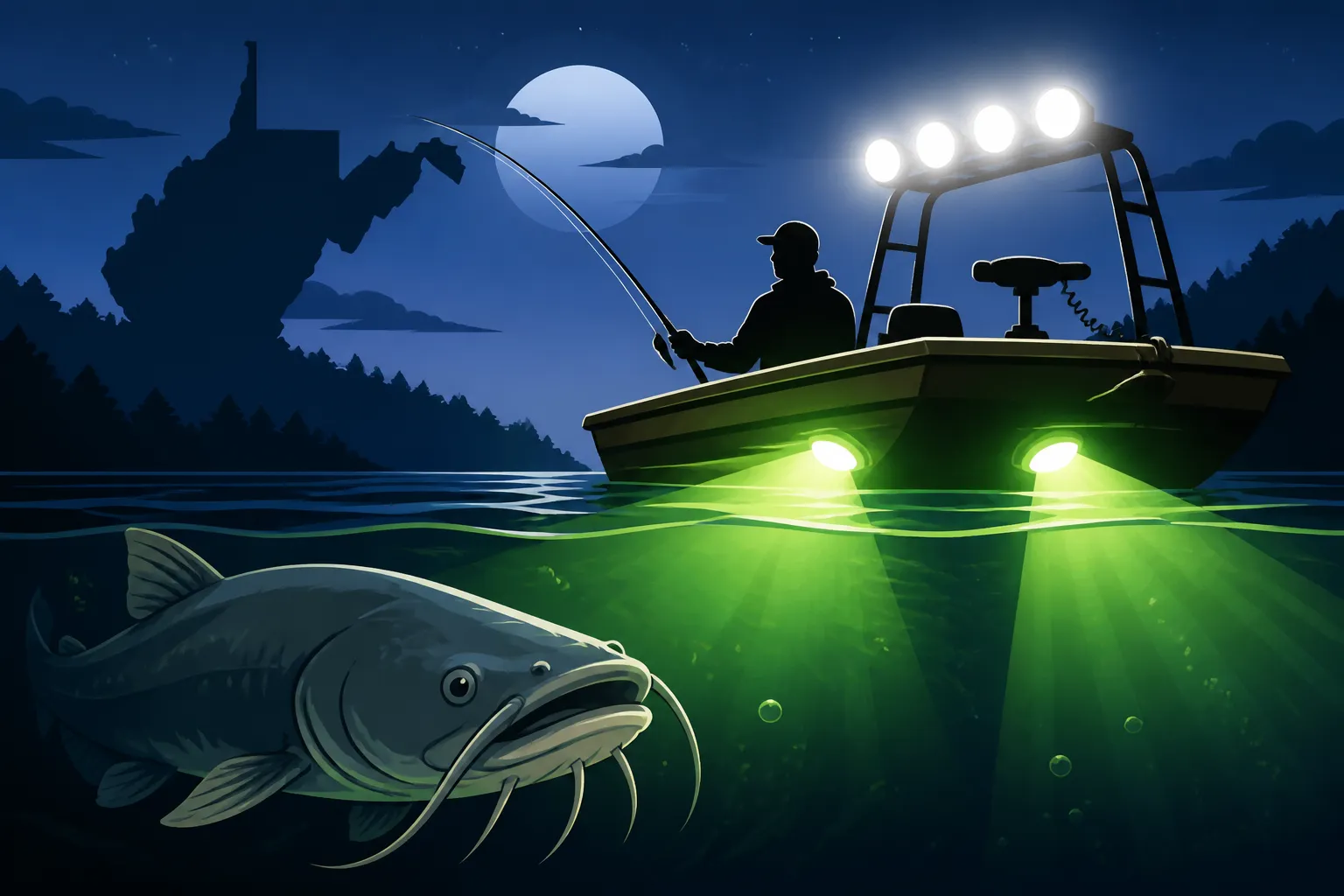
Submersible fishing lights are perhaps the most popular choice for attracting catfish. These are weighted lights, often green or white, that you lower into the water. The green spectrum penetrates water most effectively and is known to attract a wide array of baitfish. As the baitfish swarm around the light, they create a feeding frenzy that signals to larger catfish that an easy meal is nearby. Many anglers swear by green lights for their catfishing success, noting a marked increase in activity around their boat. These lights come in various wattages and lengths, so you can choose one that suits your boat size and power supply.
Surface green or white lights offer a similar effect, but they float on the water's surface or are mounted just above it. While perhaps not as effective at drawing in deep-water baitfish as submersible lights, they still create a glowing column of light that can attract fish, and they have the added benefit of illuminating the water around your boat, making it easier to spot activity or see your lines. Both submersible and surface lights can be quite power-hungry, so careful consideration of your boat's battery capacity is crucial. Many dedicated catfishermen run these off a separate deep-cycle battery to avoid draining their starting battery.
Some modern fishing lights even offer adjustable brightness or color settings, allowing you to experiment with what works best on a given night or in a particular body of water. Keep an eye on the market, checking out new innovations on platforms like Amazon, as manufacturers are constantly improving efficiency and brightness. Remember, these lights are about enhancing your fishing, so choose models known for durability and performance in a marine environment.
Choosing and Installing Your Catfishing Boat Lights
Selecting and installing the right boat lights for night catfishing isn't just about picking up a few gadgets; it's about creating a cohesive, reliable system. You need to consider how everything will work together, from power consumption to placement, to ensure your setup is both effective and safe. A little planning goes a long way in avoiding headaches down the road.
| Light Type | Primary Function | Power Consumption | Installation Difficulty | Key Benefit |
|---|---|---|---|---|
| Navigation Lights | Safety, Legal Compliance | Low | Moderate | Essential for visibility & avoiding fines |
| Deck/Task Lights | Illumination for activities | Low-Moderate | Easy-Moderate | Improves efficiency & reduces fumbling |
| Compartment Lights | Storage illumination | Very Low | Easy | Finds tackle quickly, reduces clutter |
| Submersible Fish Lights | Attract Baitfish/Catfish | High | Easy (portable) | Boosts catch rates by drawing in fish |
| Spotlight/Emergency | Scanning, signaling | Moderate-High | Easy (handheld) | Critical for safety & hazard identification |
Powering Your Lights: Battery Management and Wiring
One of the biggest considerations for any boat lighting setup, especially when you're adding powerful fish-attracting lights, is your electrical system. Most small to medium-sized fishing boats operate on a 12-volt DC system, which means your lights will draw power directly from your boat's battery. If you're only adding a few LED strips and upgrading your navigation lights, your existing starting battery might handle it just fine. However, if you plan on running multiple powerful submersible lights, a livewell, and a fish finder all night, you're almost certainly going to need a dedicated deep-cycle battery for your accessories.
Wiring is another critical aspect. Using the correct gauge wire for the length of the run and the current draw of your lights is essential to prevent voltage drop and potential fire hazards. Always incorporate in-line fuses for each circuit to protect your wiring and equipment from overcurrent. Waterproof switches and connections are non-negotiable in a marine environment; saltwater and freshwater alike are incredibly corrosive, and exposed wiring will quickly fail. Many anglers find it beneficial to consult wiring diagrams or even a marine electrician if they're unsure, especially for more complex setups. Taking the time to do it right means you won't be troubleshooting power issues when the catfish are biting.
Beyond traditional battery setups, some anglers incorporate solar charging systems, especially for smaller boats or those using less power-intensive lights. Small solar panels can trickle-charge a dedicated accessory battery throughout the day, ensuring you have enough juice for a full night of fishing without constantly running your main engine. This is particularly useful if you're frequently fishing remote areas without easy access to shore power for recharging. For larger systems, consider a battery isolator to ensure your starting battery always has enough power to get you home, even if your accessory battery runs low. You'll find many marine battery options at retailers like Bass Pro Shops.
Mounting and Placement for Optimal Performance
Where you put your lights can make a huge difference in their effectiveness and your overall experience. For navigation lights, placement is largely dictated by regulations: your bow lights must be visible from specific angles, and your all-around white light must be unobstructed from 360 degrees. Improper placement can not only result in a citation but also, more importantly, create dangerous situations where other boaters might misinterpret your vessel's status or direction. Always refer to the West Virginia Boating Laws for Anglers for exact requirements.
When it comes to task and deck lighting, strategic placement is key to illuminating your work areas without creating glare that blinds you or your fishing partners. Aim to mount LED strips under gunwales or consoles where they cast light downwards or inwards, rather than directly into your eyes. For spreader lights, position them high enough to cover a wide area of the deck without casting harsh shadows or reflecting off the water too intensely. Think about your most common tasks: baiting, netting, cleaning fish – where do you need light the most?
For submersible fishing lights, the typical placement is off the stern or side of the boat, suspended at a depth that best attracts baitfish in your specific fishing spot. Experimentation here is crucial; sometimes deeper is better, sometimes shallower, depending on the water clarity, depth, and the behavior of the fish. Ensure the light is securely fastened and won't drift into your prop or get lost. Many portable submersible lights simply attach to a rope and drop over the side. Remember that weatherproofing isn't just for switches; all your light fixtures, especially those exposed to spray and elements, need to be marine-grade to withstand the harsh environment.
Maintenance and Troubleshooting Common Lighting Issues
Even the best boat lights require a little love and attention to ensure they perform flawlessly trip after trip. Just like any other piece of marine equipment, neglect can lead to premature failure and leave you in the dark when you least expect it. A little routine maintenance can save you a lot of frustration and potential cost down the line.
The most common issues often stem from corrosion and loose connections. Regularly inspect all wiring, terminals, and connectors for any signs of rust or oxidation. A little dielectric grease on connections can go a long way in preventing corrosion, especially in saltwater or humid conditions. Ensure all light lenses are clean; built-up salt spray, grime, or algae can significantly reduce light output. A simple wipe-down with fresh water and a mild cleaner after each trip can keep your lights shining brightly.
For systems that use traditional incandescent bulbs, always carry spares and know how to quickly replace them. While modern LED lights boast impressive longevity, they aren't entirely immune to failure. If an LED light fails, it's often a wiring issue or a problem with the driver, so check those connections first. Keeping your boat's battery charged and testing all your lights before you leave the dock are simple steps that can prevent most nighttime lighting woes. There’s nothing worse than discovering a navigation light is out when you’re already miles from shore in the pitch black.
If you encounter an issue mid-trip, having a basic understanding of your boat's electrical system can be a lifesaver. Check your fuses first; a blown fuse is often the culprit for a sudden loss of power to a specific light or circuit. A multimeter can be an invaluable tool for diagnosing more complex electrical problems, allowing you to check for voltage and continuity. When in doubt, it's always best to consult a professional marine mechanic or electrician rather than attempting a risky DIY repair that could cause further damage or create a safety hazard.
Legalities and Best Practices for Night Boating in West Virginia
Before you even think about dropping a line after dark, it’s absolutely crucial to understand the rules of the road for boating at night. West Virginia, like all states, has specific regulations regarding boat lighting and operation after sunset, designed to ensure everyone's safety on the water. Ignorance of these laws is no excuse, and violating them can have serious consequences beyond just a ruined fishing trip.
West Virginia's Boating Light Regulations
Operating a boat after sundown or during periods of restricted visibility (like fog) requires specific lights to be displayed. Generally, this means your red and green bow navigation lights and an all-around white stern light must be on. The white light serves as an anchor light when your boat is moored or anchored in areas outside a designated mooring area. These lights make your vessel visible to others, helping prevent collisions, which are far more common at night. It's not just about turning them on; they must be fully functional and visible from the required distances.
The West Virginia Department of Natural Resources (WVDNR) provides comprehensive guides to boating laws. You can often find a copy of the West Virginia Fishing Regulations Explained which also covers basic boating rules. Failing to display proper navigation lights is not a minor infraction; it can result in citations, fines, and in some cases, can even lead to more severe penalties if it contributes to an accident. Moreover, if an accident occurs and your boat wasn't properly lit, you could be held liable. Always ensure your lights are installed correctly, are adequately bright, and are free from obstructions that might block their visibility.
It's also important to note that specific water bodies, such as sections of the Ohio River or New River Gorge National Park, might have additional regulations or specific conditions that require extra caution. Being familiar with these local nuances can be just as important as knowing the statewide rules. A good practice is to carry a printed or digital copy of the latest regulations and consult it before heading out, especially if you're exploring new waters.
Being a Responsible Night Angler
Beyond just legal compliance, being a responsible night angler involves a broader commitment to safety and courtesy on the water. The darkness doesn't give you license to ignore common sense or disregard other users of the waterway. In fact, it demands even greater awareness and consideration for your surroundings.
First and foremost, minimize light pollution when possible. While you need your navigation lights on, and task lighting for safety, avoid unnecessary bright floodlights that can blind other boaters or disrupt the night vision of fellow anglers who might be fishing nearby. A subtle approach to lighting can make a big difference in the overall experience for everyone. Be mindful of others' privacy and their fishing experience. For instance, if you're approaching another boat that's clearly settled in for some night fishing, dim any unnecessary bright lights as you pass.
Situational awareness is heightened at night. Slow down, especially in unfamiliar waters or areas with known hazards. Sound travels differently on water, so listen for other boats, warnings, or even the sounds of wildlife. Always have your West Virginia Boating Laws for Anglers safety equipment readily accessible – life jackets for everyone on board, a throwable PFD, a sound-producing device (like a horn), and a fire extinguisher. Ensure these are not only on board but also in good working order.
When anchoring for catfishing, make sure your anchor light (your all-around white light) is clearly visible. If you're in an area with any current, you might consider setting a fore and aft anchor to keep your boat stable and prevent it from swinging into other vessels or hazards. Using reflective tape on your boat or gear can also subtly increase your visibility to other boaters without adding to light pollution. By practicing these responsible habits, you not only keep yourself safe but also contribute to a positive and enjoyable environment for everyone who cherishes West Virginia's waterways after dark.
Disclaimer
This article is for general informational purposes only and does not constitute professional advice. Laws, prices and regulations vary by location and change over time. Consult a qualified professional for guidance on your specific situation.